This part is Supplement content (syllabus 8.4.1 to 8.4.3).
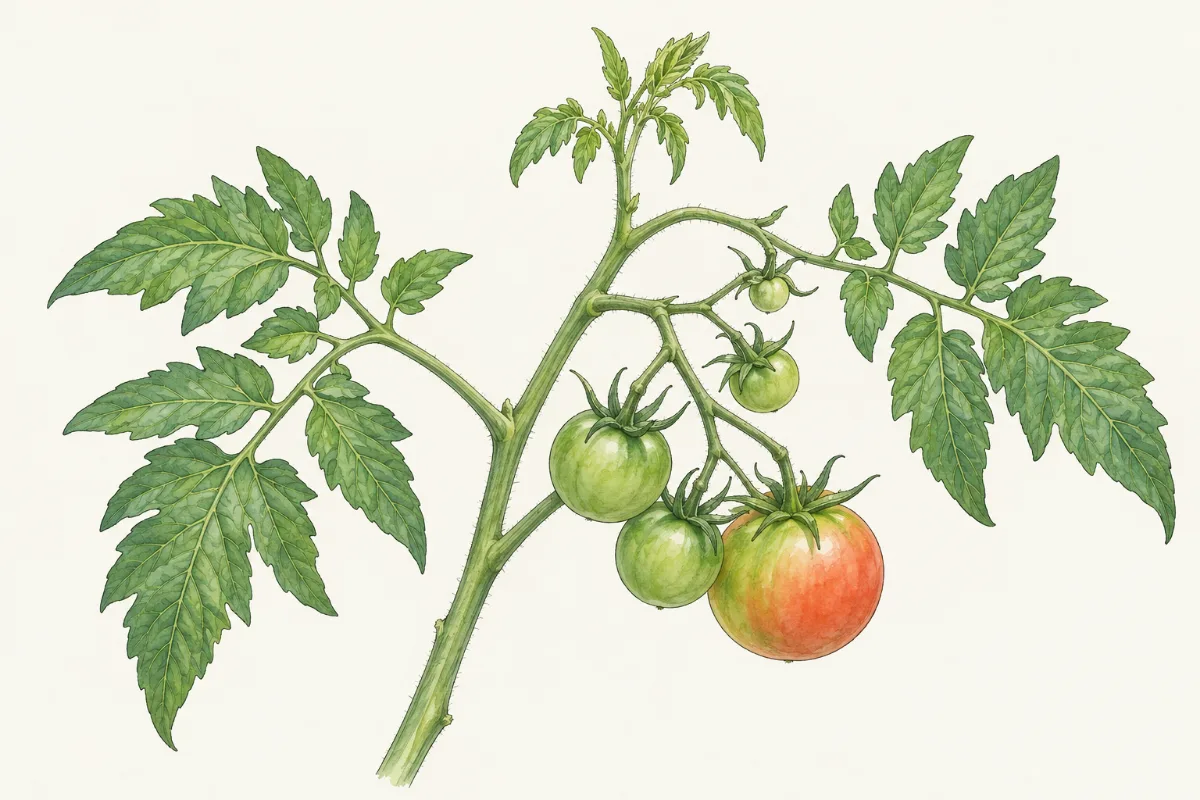
A tomato plant in summer is full of growing parts that cannot feed themselves. A green tomato swells for weeks; the shoot tip keeps making new leaves; new flowers open; the roots grow deeper. None of these can make enough sugar for itself. The sugar they use is made in the plant's full-grown green leaves, often far away. Your dye showed how water goes up the plant in the xylem. This part is about the other transport tissue, the phloem, and how it carries food to where it is needed.
 (enlarge)
Translocation
Leaves make glucose by photosynthesis. They change much of it into sucrose, a sugar that is carried easily in solution. They also make amino acids, from sugars and the nitrate ions taken in by the roots. The phloem carries sucrose and amino acids around the plant.
Translocation is the movement of sucrose and amino acids in the phloem, from sources to sinks.
Xylem carries water only one way: up, from the roots to the leaves. The phloem carries sucrose and amino acids in whichever direction a sink lies: up to a shoot tip or a flower, down to the roots or a store underground.
Trap: "Translocation is the movement of water up the xylem." Water moving up the xylem is part of the pathway of water. Translocation is the movement of sucrose and amino acids in the phloem.
Sources and sinks
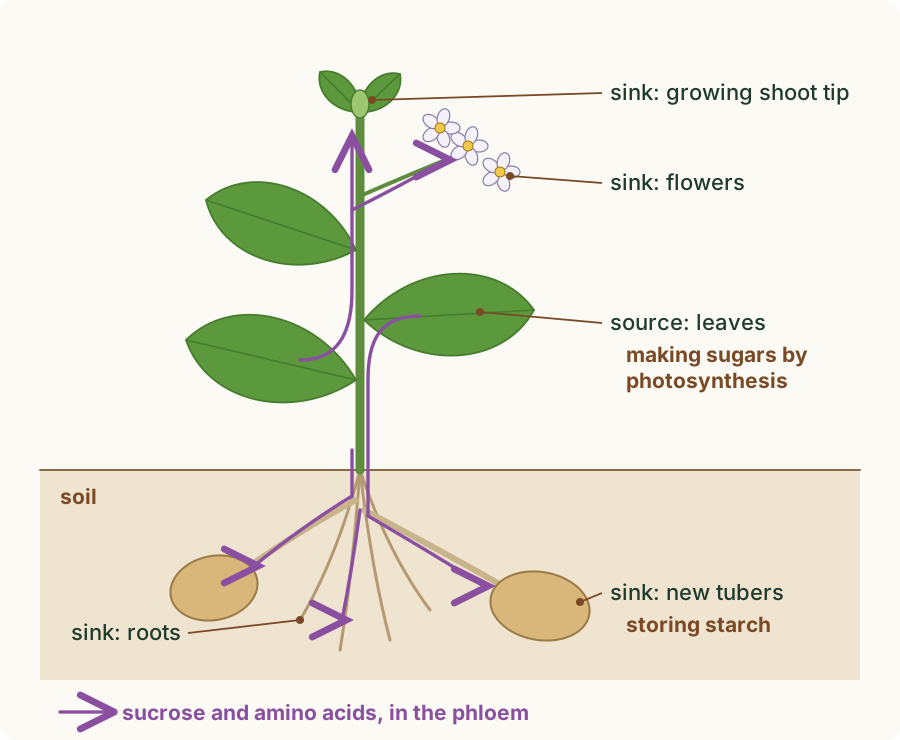
- A source is a part of a plant that releases sucrose or amino acids into the phloem. In summer, a full-grown leaf in the light is the main source: it makes more sugar by photosynthesis than it uses itself.
- A sink is a part of a plant that uses or stores sucrose or amino acids. Growing parts use them: in respiration, for energy, and to make new cells, with cellulose for their walls and proteins from the amino acids. Storage parts store them, often after changing sucrose into starch.
 (enlarge)
Sinks in a plant in summer:
- the growing shoot tip and young leaves, which use sucrose and amino acids to grow;
- flowers, and then the fruits and seeds growing inside them, which use them and store them;
- the roots, which cannot photosynthesise in the dark soil, so they need sucrose for respiration and growth;
- storage organs such as potato tubers, which store sucrose as starch.
Trap: "The roots are a source, because they take things in from the soil." Roots take in water and mineral ions, which go up in the xylem. They cannot make sucrose, so for sucrose and amino acids they are a sink.
Worked example
A strawberry runner
Supplement. A strawberry plant in summer has full-grown leaves in the light and ripening strawberries. It also sends out a runner, a long, thin stem along the ground, with a small new plant at its end that is just growing its first roots and leaves. Which parts are the source and which are sinks, and how do sucrose and amino acids reach the new plant?
The source is the parent plant's full-grown leaves in the light: they make more sugar by photosynthesis than they use, and release sucrose and amino acids into the phloem. The sinks are the parts that use or store them: the ripening strawberries, which store sugar and use it as their seeds grow, and the small new plant, whose young leaves cannot yet make enough sugar for their own growth and whose new roots need sucrose for respiration. Sucrose and amino acids reach the new plant by translocation, the movement of sucrose and amino acids in the phloem from sources to sinks: here, along the phloem of the runner.
Source at one time, sink at another
Whether a part is a source or a sink depends on whether, at that time, it is releasing sucrose and amino acids or using and storing them. So some parts are a source at one time and a sink at another.
 (enlarge)
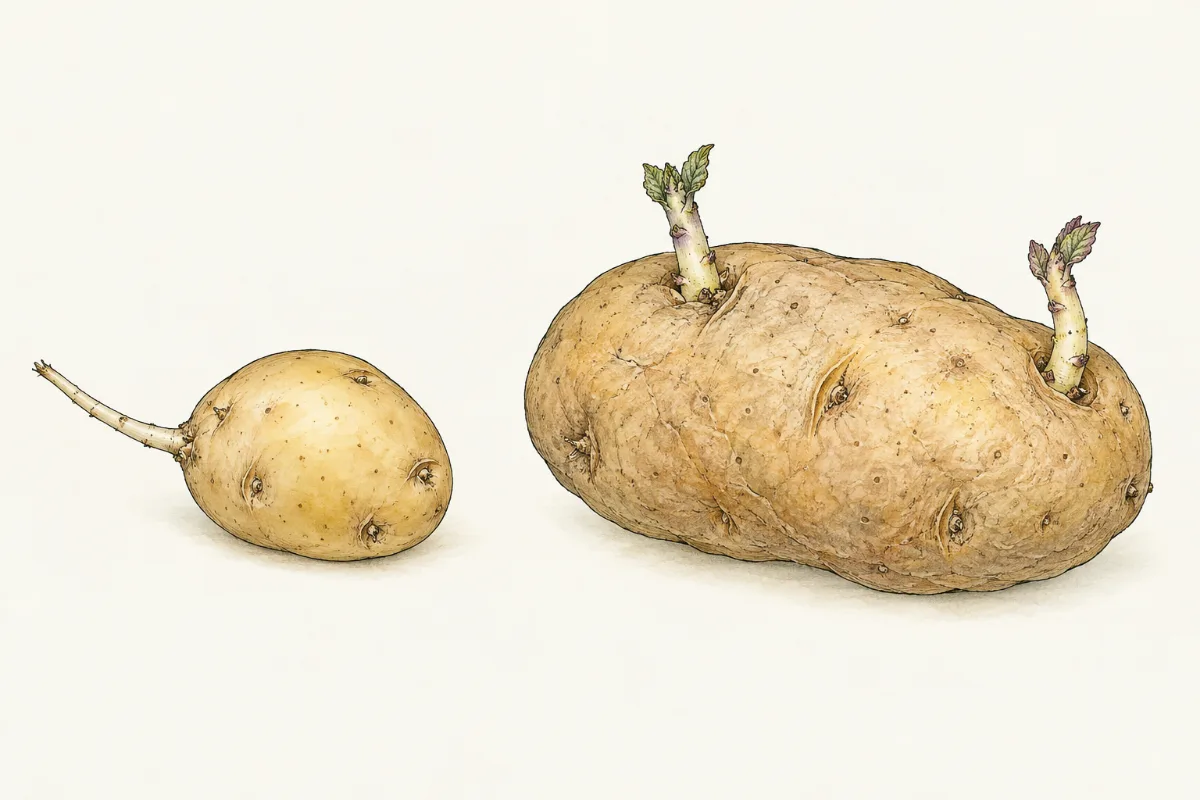
A potato tuber. In summer, a new tuber grows at the end of an underground stem. Sucrose arrives in the phloem from the leaves and the tuber stores it as starch: the tuber is a sink. The plant dies back in autumn, and the tuber stays in the soil through the winter. In spring it sprouts, but its new shoots have no green leaves yet and cannot photosynthesise. The tuber breaks its starch down into sucrose, which the phloem carries to the growing shoots: now the tuber is a source.
A leaf. A young leaf, still unfolding, cannot yet make enough sugar for its own growth, so it takes in sucrose and amino acids from the phloem: it is a sink. Once it is full-grown and its chloroplasts are working, it makes more sugar than it uses, and releases sucrose into the phloem: it becomes a source.
The same is true of many plants that live for more than one year. A carrot stores sucrose as starch in its swollen root in its first summer, a sink; the next spring the stored food is carried up to make a flowering shoot, so the root becomes a source.
Trap: "A leaf is always a source." A young, growing leaf is a sink. A leaf is a source only once it can make more sugar than it uses.
Worked example
A daffodil bulb through the year
Supplement. A daffodil bulb is planted in autumn. In early spring, before it has any open leaves, a shoot grows up from it, and later the plant flowers. After flowering, the green leaves stay for several weeks in the light, and the bulb swells again. Explain why the bulb is a source at one time and a sink at another.
In early spring the shoot has no open green leaves, so it cannot photosynthesise. The bulb breaks down its stored food and releases sucrose and amino acids into the phloem, which carries them up to the growing shoot: the bulb is a source. After flowering, the full-grown leaves in the light make more sugar than they use, so they are now the source. The bulb takes in sucrose from the phloem and stores it, building up the food it will use next spring: it is a sink. Whether a part is a source or a sink depends on whether, at that time, it is releasing sucrose and amino acids or using and storing them.
Comparing xylem and phloem
| Xylem | Phloem | |
|---|---|---|
| Carries | water and mineral ions | sucrose and amino acids |
| Direction | up only, from the roots to the leaves | up or down, from sources to sinks |
| Also | helps to support the plant | — |
| In a stem | inner side of each bundle | outer side of each bundle |
Key idea: Translocation is the movement of sucrose and amino acids in the phloem from sources to sinks. A source is a part of a plant that releases sucrose or amino acids, such as a full-grown leaf in the light. A sink is a part that uses or stores them, such as a growing shoot tip, a flower, a fruit, the roots or a storage organ. Some parts change: a potato tuber is a sink while it stores starch in summer, and a source when it sprouts in spring and its starch is broken down to sucrose for the new shoots; a young leaf is a sink, and becomes a source once it makes more sugar than it uses.