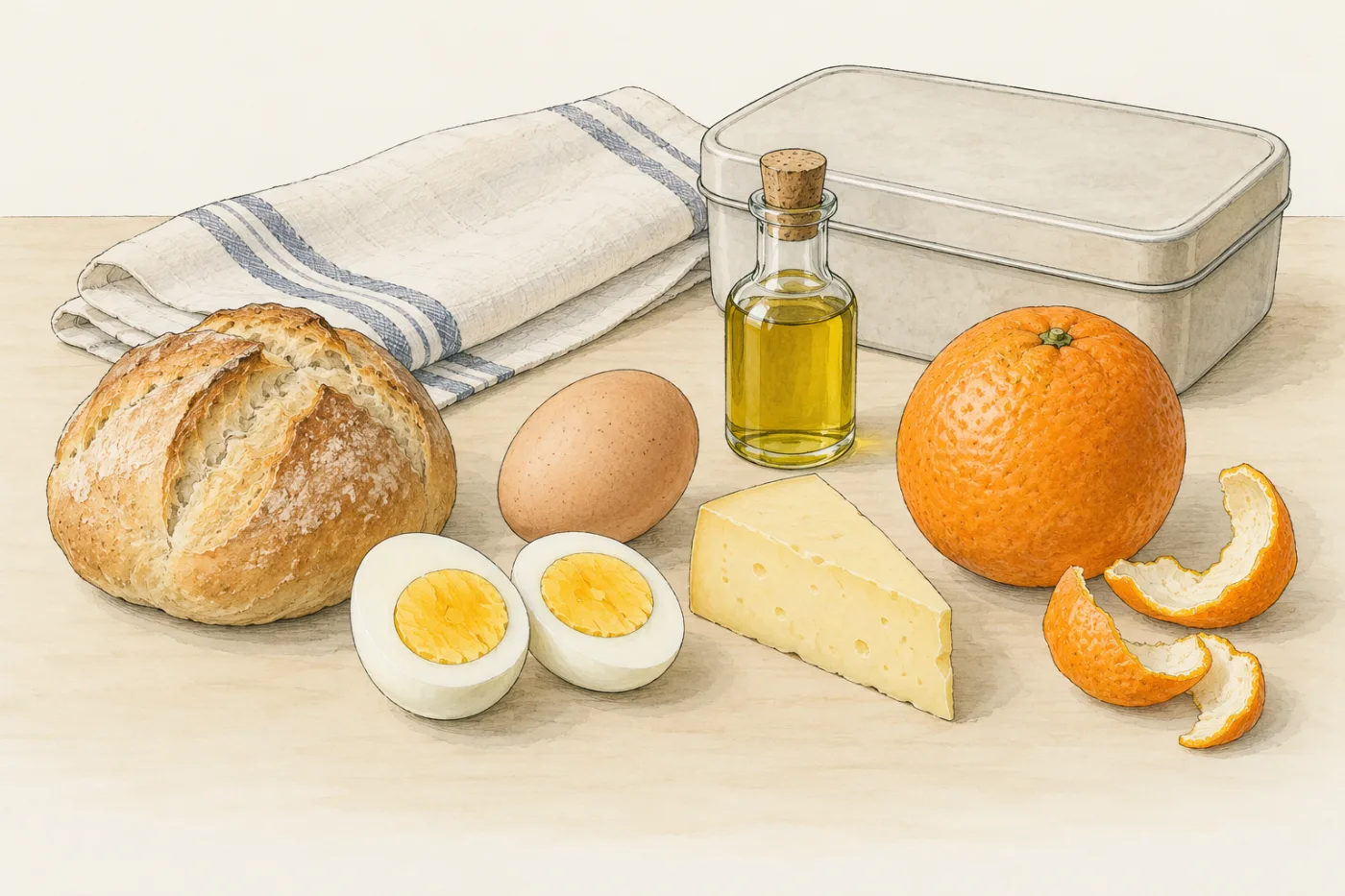
Open a packed lunch: a bread roll, a boiled egg, a piece of cheese, an orange and a small bottle of olive oil. Suppose you could keep only one of them. Which would you choose, and what would your body go without? Each of these foods brings something the others do not have much of. In this part you find out what those things are, which foods they come from, and what the body does with each.
 (enlarge)
Seven kinds of nutrient
The substances in food that the body uses are called nutrients. They do three kinds of job: they give the body energy, they supply the materials it grows and repairs itself with, and they keep its processes working, such as carrying oxygen in the blood or moving food through the gut.
There are seven kinds of nutrient:
- carbohydrates
- fats and oils
- proteins
- vitamins (in this course, vitamins C and D)
- mineral ions (in this course, calcium and iron)
- fibre, also called roughage
- water
Most foods contain several of them. The lunch shows it: cheese is rich in protein, fat and calcium; the bread roll is mostly starch but has some protein and fibre too. When we call a food "a protein food", we only mean that protein is one of the things it is richest in.
Trap: "A food is either a carbohydrate, a fat or a protein." Most foods contain several nutrients. Milk, for example, contains protein, fat, sugar, calcium and water.
Carbohydrates, fats and oils: energy
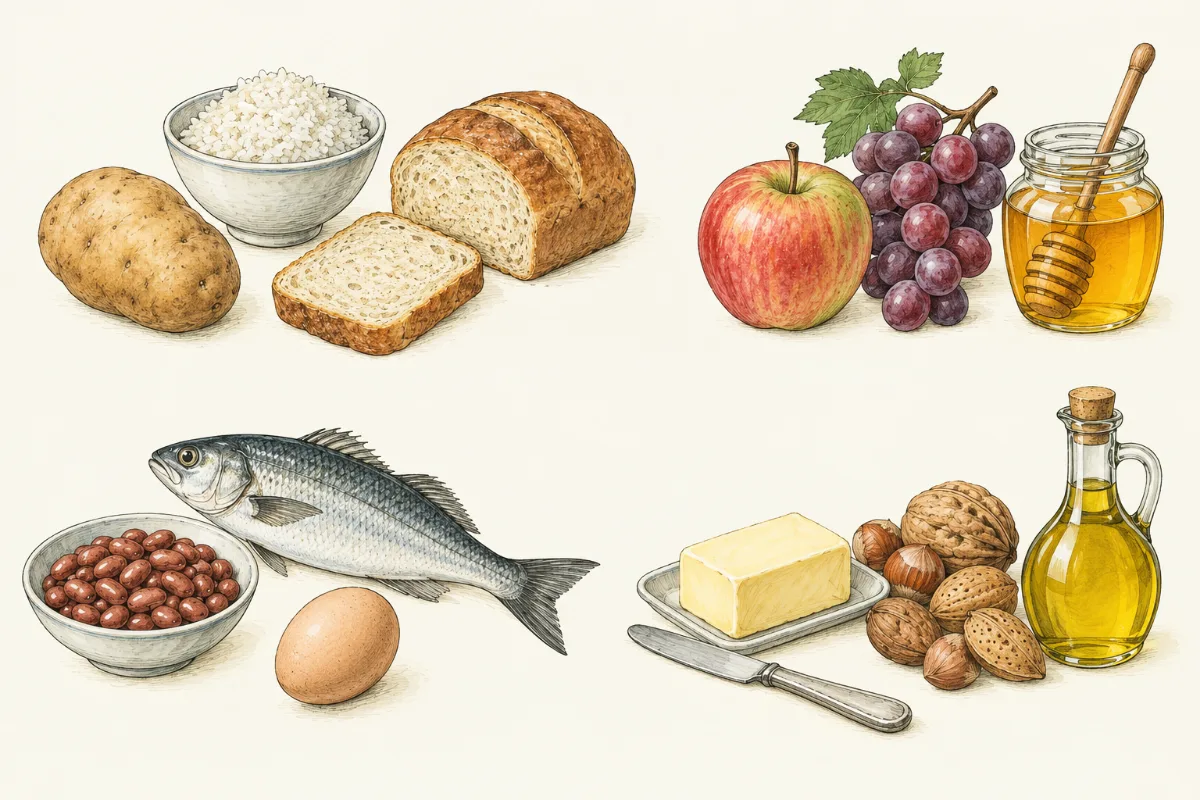
Carbohydrates are the main source of energy in most diets. Starchy foods such as bread, rice, pasta and potatoes are rich in starch, and sweet foods such as fruit and honey contain sugars. Starch is digested to glucose, and the cells respire glucose to release the energy they need.
Fats and oils are a source of energy too, and the body stores spare energy as fat. A layer of fat under the skin insulates the body, so it loses heat more slowly, and fats are used to build the membrane around every cell. Good sources are butter, cooking oil, cheese, nuts and oily fish.
 (enlarge)
Proteins: growth and repair
Proteins are used for growth and repair. Every new cell, in a growing child or in skin healing over a cut, is built partly from proteins, and the body makes them from the amino acids in the protein it eats. Enzymes are proteins too. Good sources are meat, fish, eggs, milk and cheese, and from plants beans, lentils and nuts.
Trap: "Protein is the body's main fuel." The body can respire protein, but its main job is building and repairing cells. The main sources of energy are carbohydrates and fats.
Worked example
Peanuts for a climb
A climber packs bags of peanuts for a long day on a mountain. Peanuts are rich in fat and in protein. Explain what each of these two nutrients does for the climber.
Take each nutrient in turn and give its job. The fat is a source of energy: the climber's cells respire it, as they respire carbohydrate, to release the energy for a hard day's climbing, and any spare energy is stored as fat. The protein is used for growth and repair: the amino acids in it are built into the proteins of new cells, for example to repair muscle and skin. Protein is not the climber's main fuel: most of the energy from the peanuts comes from their fat.
Vitamins C and D
Vitamins are needed in very small amounts, but the body cannot work properly without them.
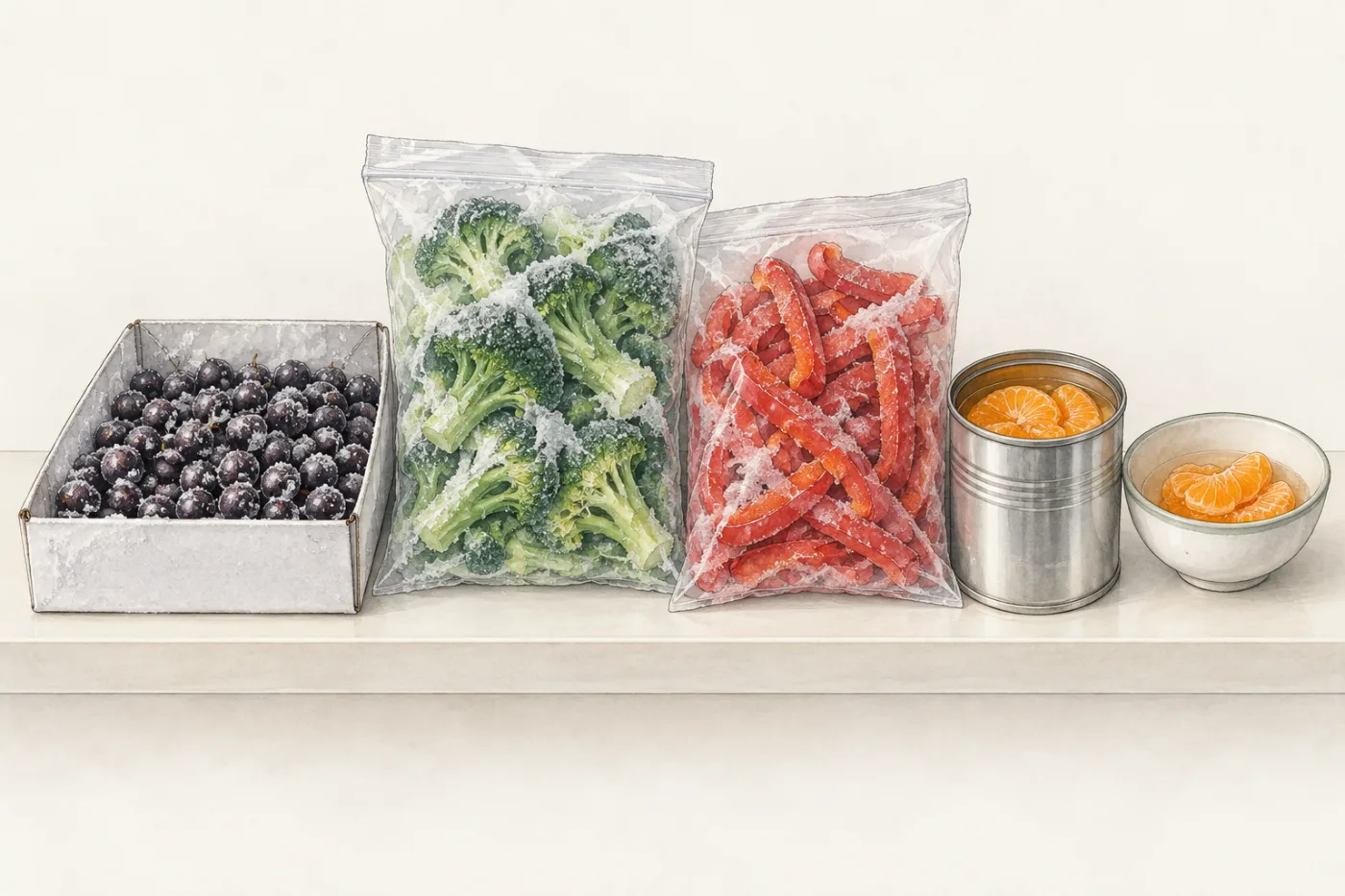
Vitamin C is needed to make a protein that holds the skin, the gums and the walls of blood vessels together. So it keeps the skin and gums healthy and helps wounds heal. It is found in fresh and frozen fruit and vegetables: oranges, lemons and other citrus fruit, blackcurrants, peppers and broccoli. Vitamin C is slowly destroyed by heat and by long storage, so boiled vegetables and old fruit juice contain less of it than fresh or frozen ones.
 (enlarge)
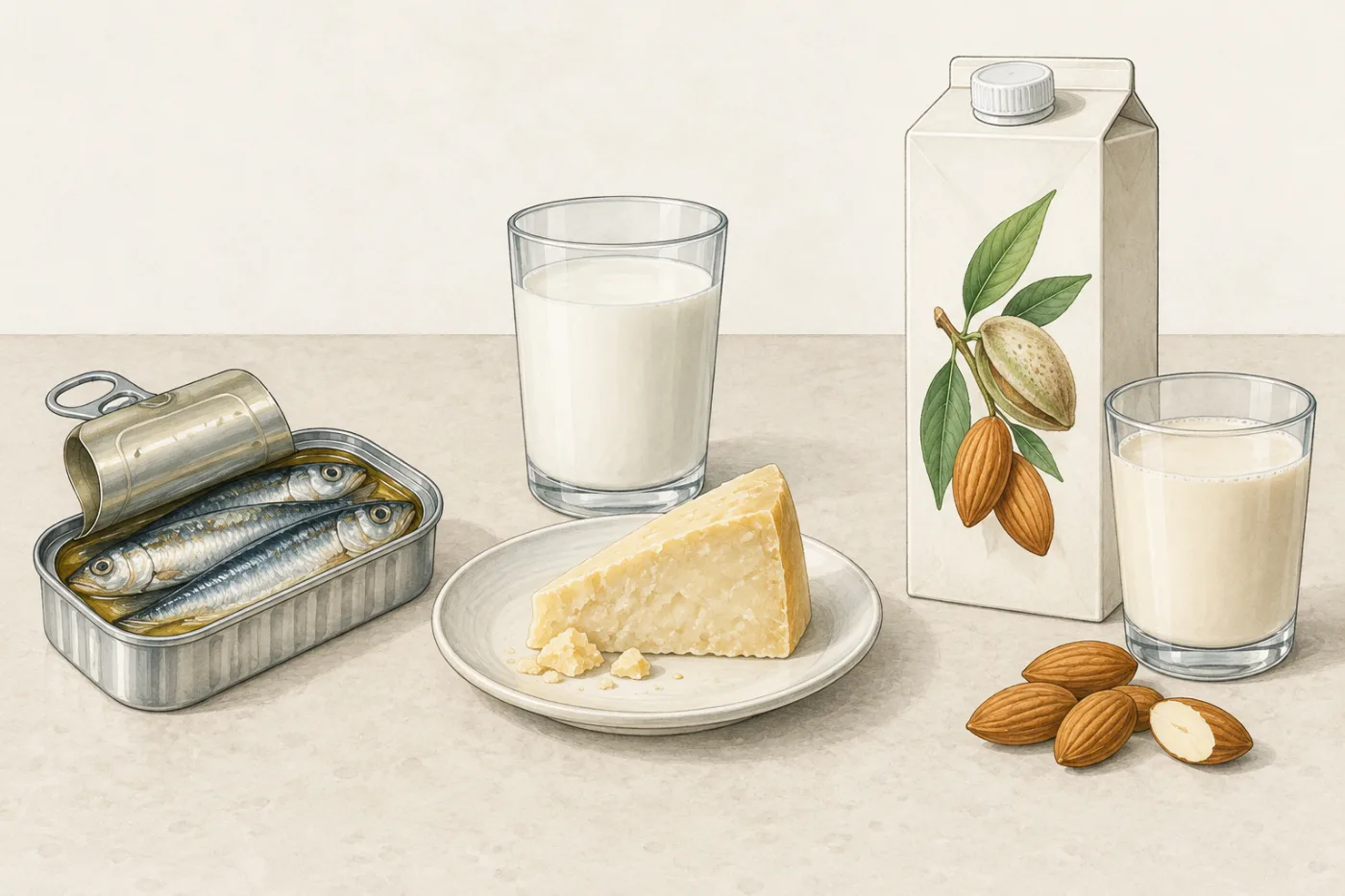
Vitamin D helps the body absorb calcium from food in the gut, so it is needed for strong bones and teeth. Few foods are rich in it: oily fish such as sardines, salmon and mackerel, egg yolk, and foods that have had vitamin D added, which are called fortified (some milks, plant drinks and breakfast cereals). The body also makes vitamin D itself: the skin makes vitamin D in sunlight.
Trap: "Vitamin D comes only from food." For most people, much of their vitamin D is made in the skin when sunlight falls on it. That is why it runs low in long, dark winters.
Calcium and iron
Mineral ions are simple substances from the soil and water that the body needs in small amounts.
Calcium makes bones and teeth hard and strong; it is also needed for blood to clot. Good sources are milk, cheese and yoghurt, fish eaten with their soft bones, such as tinned sardines, and plant drinks fortified with calcium.
 (enlarge)
Iron is needed to make haemoglobin, the red substance in red blood cells that carries oxygen around the body. With too little iron, the blood carries less oxygen and a person feels tired and weak. Good sources are red meat and liver, beans and lentils, dark green leafy vegetables such as spinach, and dried apricots.
Trap: "Calcium and iron do the same job." Calcium hardens bones and teeth; iron goes into haemoglobin in the blood.
Worked example
After giving blood
A blood donor gives about half a litre of blood. Over the next few weeks the body makes new red blood cells to replace the ones it lost. Explain why donors are advised to eat foods rich in iron during these weeks, and name two such foods.
Start from what is inside a red blood cell. Each one is full of haemoglobin, the red substance that carries oxygen, and the body needs iron to make haemoglobin. To replace half a litre of blood it must make a lot of new haemoglobin, so it needs extra iron; with too little, the new blood carries less oxygen and the donor feels tired. Good sources of iron are red meat and liver, beans and lentils, dark green leafy vegetables such as spinach, and dried apricots. Milk and cheese are no help here: they contain very little iron. They are rich in calcium, which makes bones and teeth hard and helps blood to clot, but the body cannot use it to make haemoglobin.
Fibre: keeping food moving
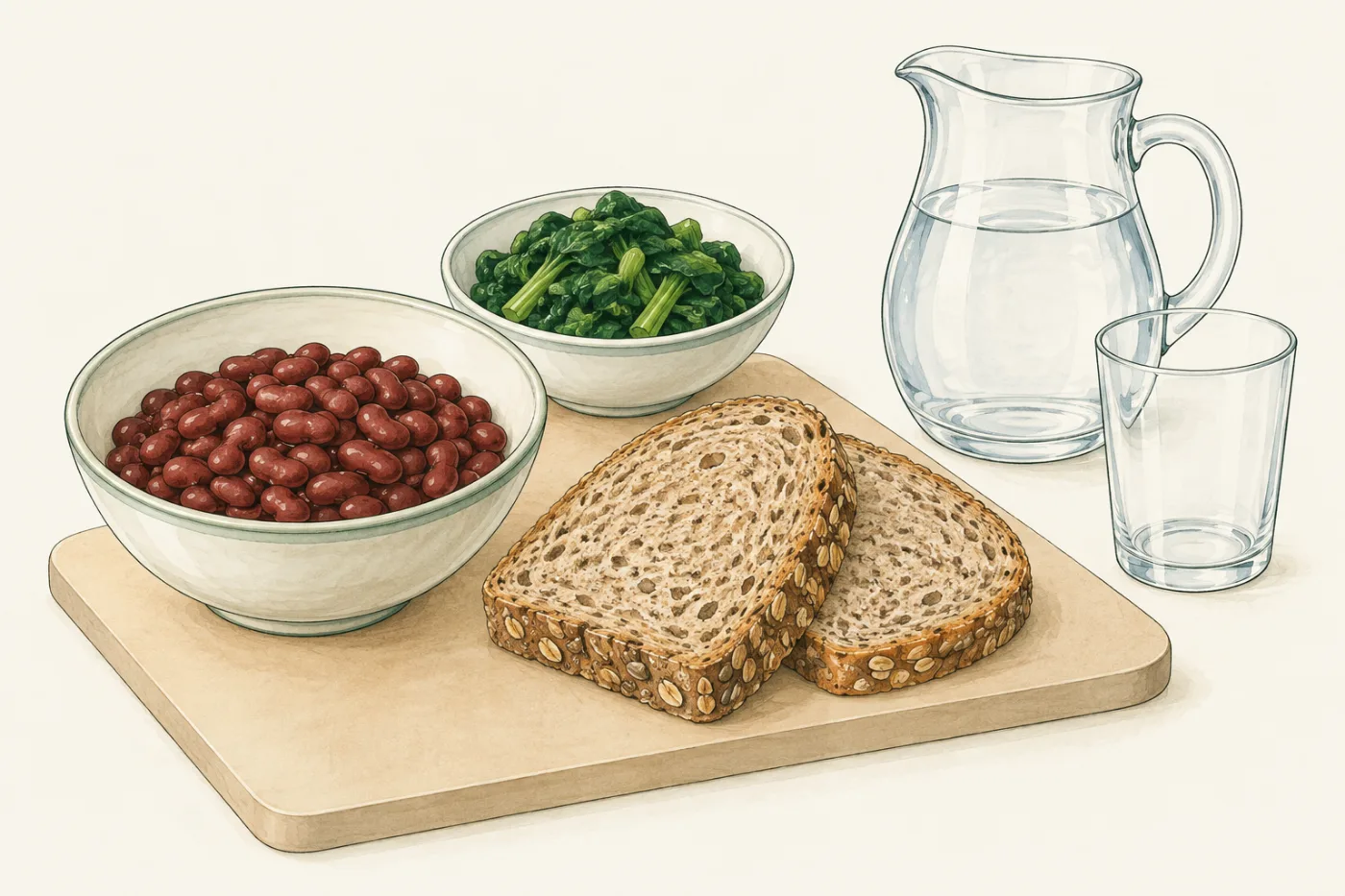
Fibre is mostly cellulose from the walls of plant cells, which the human gut cannot digest. It never passes into the blood, yet it is a nutrient: it adds bulk to the food in the gut. The muscles of the gut wall can grip the bulky food and push it along, so food keeps moving and constipation is prevented. Good sources are wholegrain bread and cereals, brown rice, vegetables, fruit and beans. Meat, fish, eggs and milk contain no fibre.
 (enlarge)
Trap: "Fibre is useless, because it is not absorbed." Fibre does its job inside the gut: without enough of it, food moves slowly and constipation follows.
Water
About two-thirds of your body is water, and you lose some every day in urine, sweat and breath, so it must be replaced from drinks and from the water in food such as fruit, vegetables and soup. The body needs water because:
- it is a solvent: many substances dissolve in it, and the chemical reactions in cells happen in solution;
- the blood plasma is mostly water, which transports dissolved substances such as glucose around the body;
- urine carries waste such as urea out of the body in water;
- sweat cools the body as its water evaporates.
Water releases no energy, but no one can live more than a few days without it.
Worked example
A bowl of lentil soup
A bowl of vegetable and lentil soup is mostly water, with pieces of carrot, onion and lentils in it. Explain how the body uses the fibre and the water in the soup.
Follow each nutrient through the body. The fibre comes from the cell walls of the vegetables and lentils. It is not digested and never reaches the blood: it stays in the gut and adds bulk, so the muscles of the gut wall can grip the food and push it along, and constipation is prevented. The water is absorbed into the blood. It replaces the water lost every day in urine, sweat and breath: in the body it is the solvent in which the reactions in cells happen, it makes up most of the plasma that carries dissolved substances, and it carries waste such as urea out in urine. So the soup is a source of water, just as a drink is.
The nutrients at a glance
| Nutrient | Why the body needs it | Good sources |
|---|---|---|
| Carbohydrates | energy | bread, rice, pasta, potatoes; sugar in fruit |
| Fats and oils | energy and an energy store; insulation; cell membranes | butter, oil, cheese, nuts, oily fish |
| Proteins | growth and repair of cells and tissues | meat, fish, eggs, milk, cheese, beans, lentils, nuts |
| Vitamin C | healthy skin and gums; healing wounds | citrus fruit, blackcurrants, peppers, broccoli |
| Vitamin D | absorbing calcium for bones and teeth | oily fish, egg yolk, fortified foods; made in the skin in sunlight |
| Calcium | hard bones and teeth; blood clotting | milk, cheese, yoghurt, sardines, fortified plant drinks |
| Iron | haemoglobin in red blood cells, which carries oxygen | red meat, liver, beans, lentils, leafy greens |
| Fibre | bulk, so food keeps moving through the gut | wholegrain bread and cereals, vegetables, fruit, beans |
| Water | solvent; transport in plasma; urine; cooling by sweat | drinks; water in food |
Work it out: a camping menu for one day is porridge, cheese sandwiches and an apple. Which nutrients come from the cheese? Which food brings the vitamin C? Which brings fibre? Try all three with the table before you check.
Check: the cheese brings protein, fat and calcium. The apple brings a little vitamin C; oranges or peppers would bring more. Fibre comes from the oats in the porridge, the bread if it is wholegrain, and the apple.
Key idea: There are seven kinds of nutrient: carbohydrates and fats for energy, proteins for growth and repair, vitamins C and D, the mineral ions calcium and iron, fibre and water. Each does its own job, and most foods contain several of them.