Adrenaline is only one of the body's hormones. Several glands release hormones into the blood, each in its own place in the body and each with its own hormone. In this part you find four of these glands in diagrams and in pictures of models and name the hormone each one secretes. The sections marked Supplement are for the Extended course.
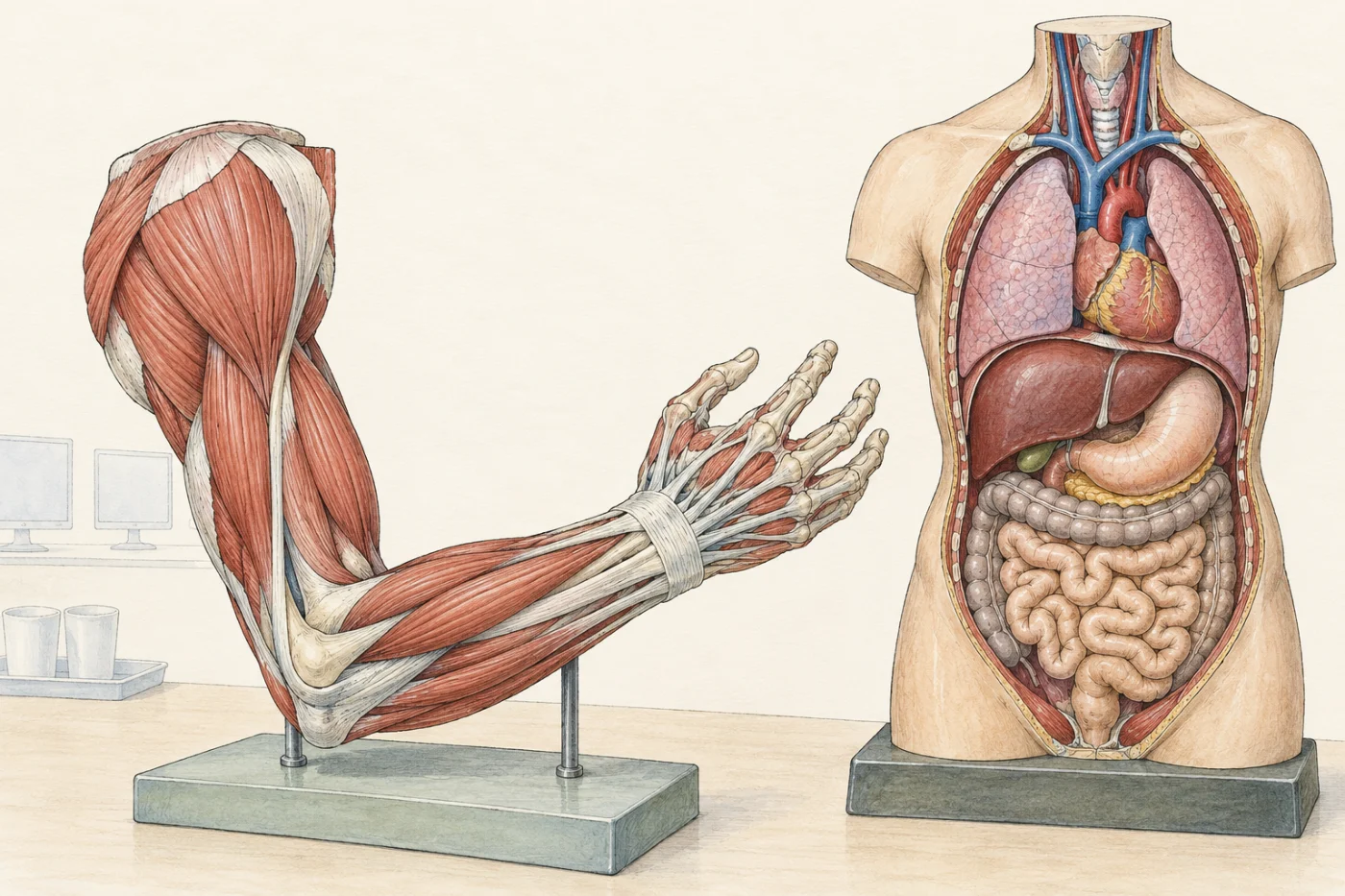 (enlarge)
Four glands
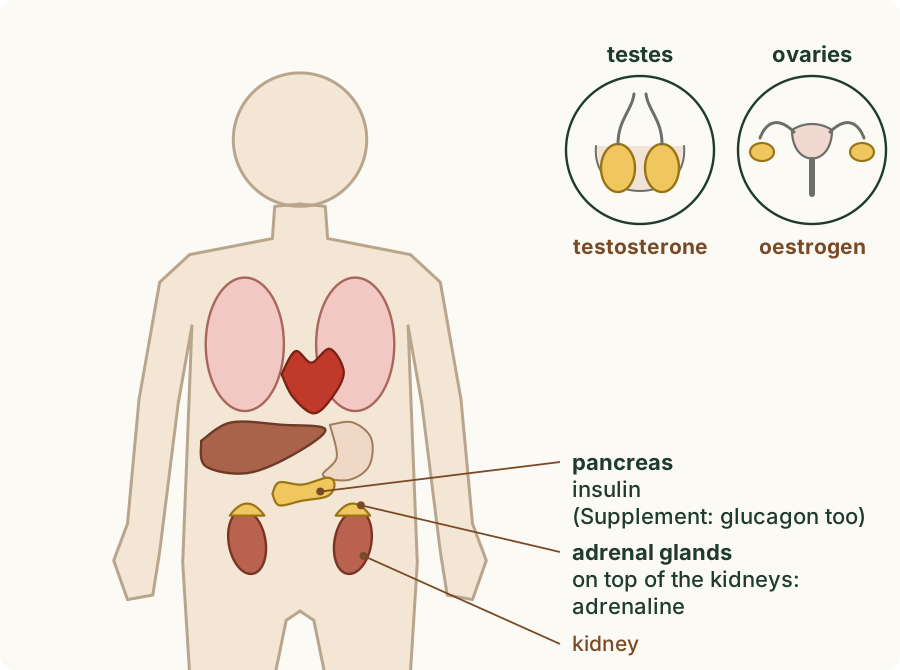 (enlarge)
| Gland | Where it is | Hormone it secretes |
|---|---|---|
| adrenal glands | one on top of each kidney | adrenaline |
| pancreas | in the abdomen, behind and below the stomach | insulin |
| testes (in males) | in a sac of skin below the abdomen | testosterone |
| ovaries (in females) | in the lower abdomen, one either side of the uterus | oestrogen |
In a diagram drawn from the front, the person's right side is on your left. Each gland releases its hormone into the blood flowing through it, and the blood carries the hormone to its target organs. What insulin does is part of the module on homeostasis; what testosterone and oestrogen do is part of the topic on human reproduction.
Trap: "The adrenal glands are part of the kidneys." They are separate glands that sit on top of the kidneys. The kidneys make urine; the adrenal glands make adrenaline.
Trap: "The ovaries make testosterone." The testes secrete testosterone; the ovaries secrete oestrogen.
Glands in pictures of models
 (enlarge)
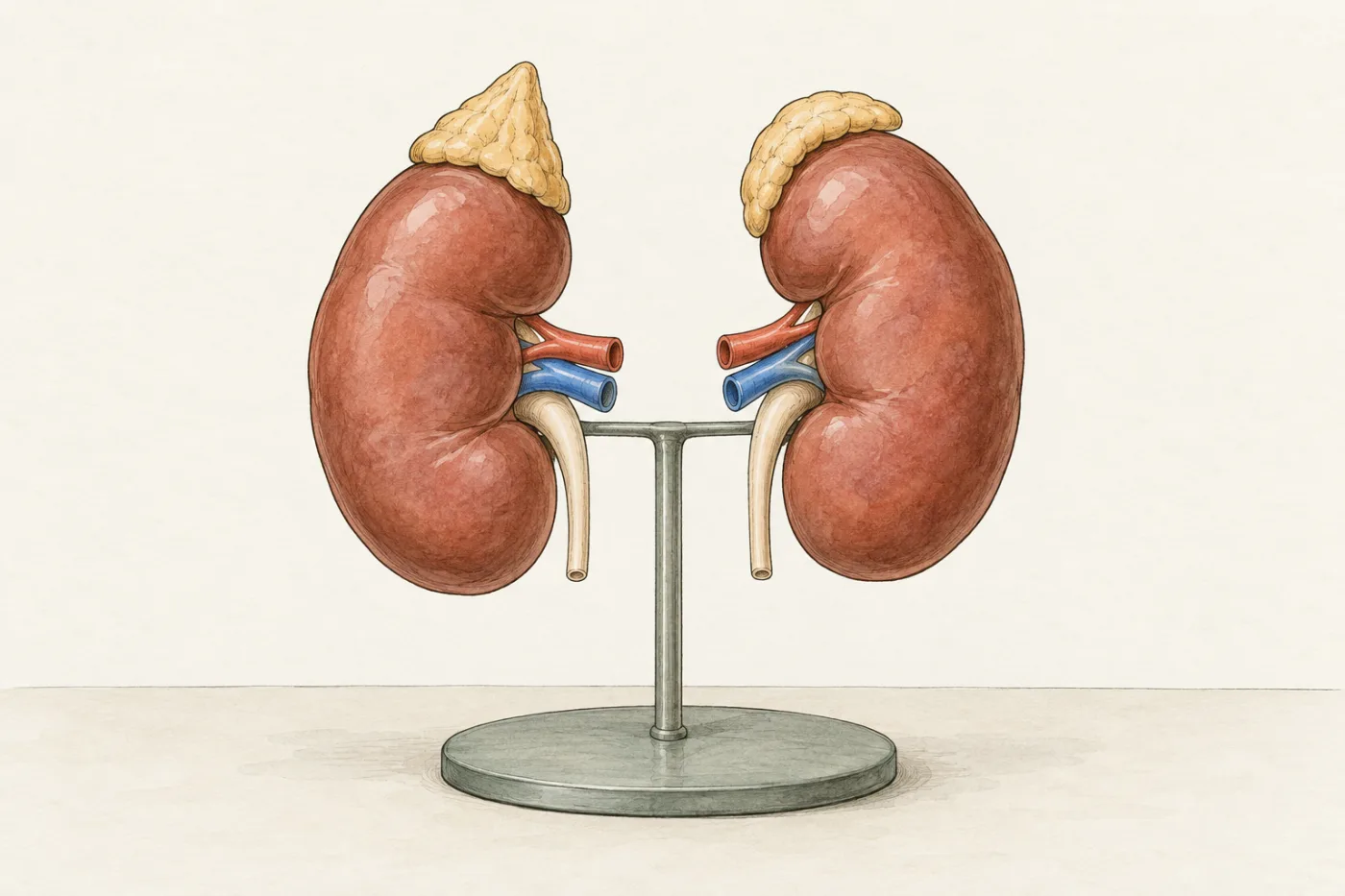
In a picture of a model, the adrenal glands are the small caps on top of the kidneys, often a different colour from the kidneys themselves.
 (enlarge)
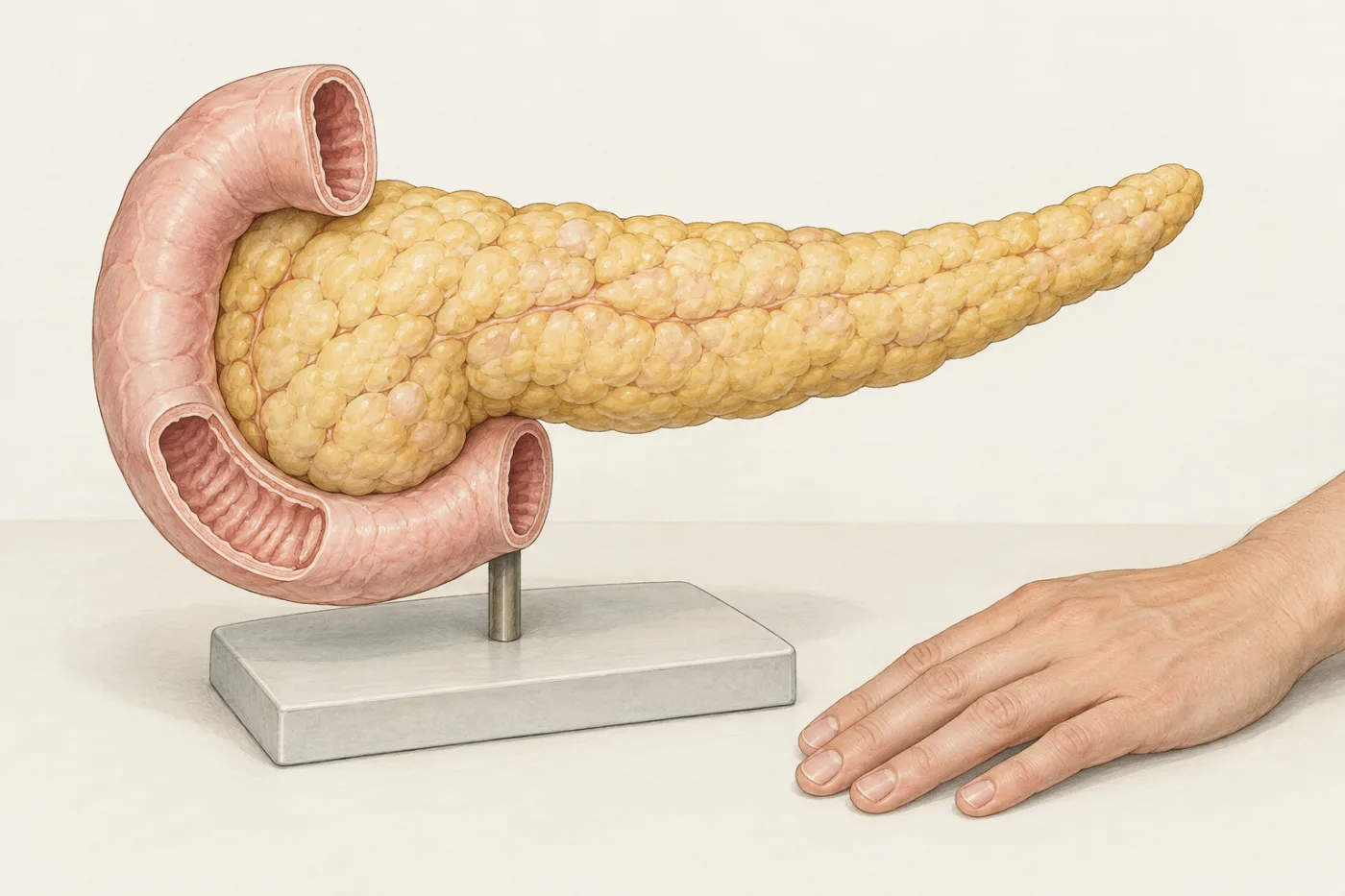
The pancreas is a long, soft gland that lies across the abdomen, behind and below the stomach, with one end in the curve of the small intestine.
Run the experiment below before you read on. A hormone is named for each step: find the gland that secretes it, on the body or in one of the round insets.
What the experiment showed
Each hormone came from one gland: adrenaline from the adrenal glands on top of the kidneys, insulin from the pancreas, testosterone from the testes and oestrogen from the ovaries. Each gland passed its hormone into the blood, which carried it round the body.
(Supplement) A second hormone from the pancreas
The pancreas secretes a second hormone as well as insulin: glucagon. Glucagon is secreted by the pancreas. What glucagon and insulin do to the blood glucose concentration is part of the module on homeostasis.
Trap: "Glucagon is made in the liver." Glucagon is secreted by the pancreas. It is carried in the blood, and the liver is one of the organs it acts on.
Worked example
Naming glands and hormones
Name the gland that secretes each hormone: (a) oestrogen; (b) adrenaline; (c) insulin; (d) testosterone.
(a) The ovaries. (b) The adrenal glands. (c) The pancreas. (d) The testes. Learn the four as pairs, gland and hormone together, and check that each gland appears once.
Worked example
A gland in a diagram
A diagram of the abdomen shows two kidneys. A label line points to a small gland on top of the left kidney. Name the gland and its hormone.
The gland on top of a kidney is an adrenal gland, and it secretes adrenaline. Use the gland's position to identify it: on top of a kidney means an adrenal gland, not the kidney itself.
Worked example
(Supplement) Two hormones from one gland
Name the two hormones in the syllabus that are secreted by the pancreas.
Insulin and glucagon. Both are secreted by the pancreas and carried in the blood.
Key idea: Four endocrine glands and their hormones: the adrenal glands (on top of the kidneys) secrete adrenaline; the pancreas secretes insulin; the testes secrete testosterone; the ovaries secrete oestrogen. Each passes its hormone into the blood. (Supplement) The pancreas also secretes glucagon.