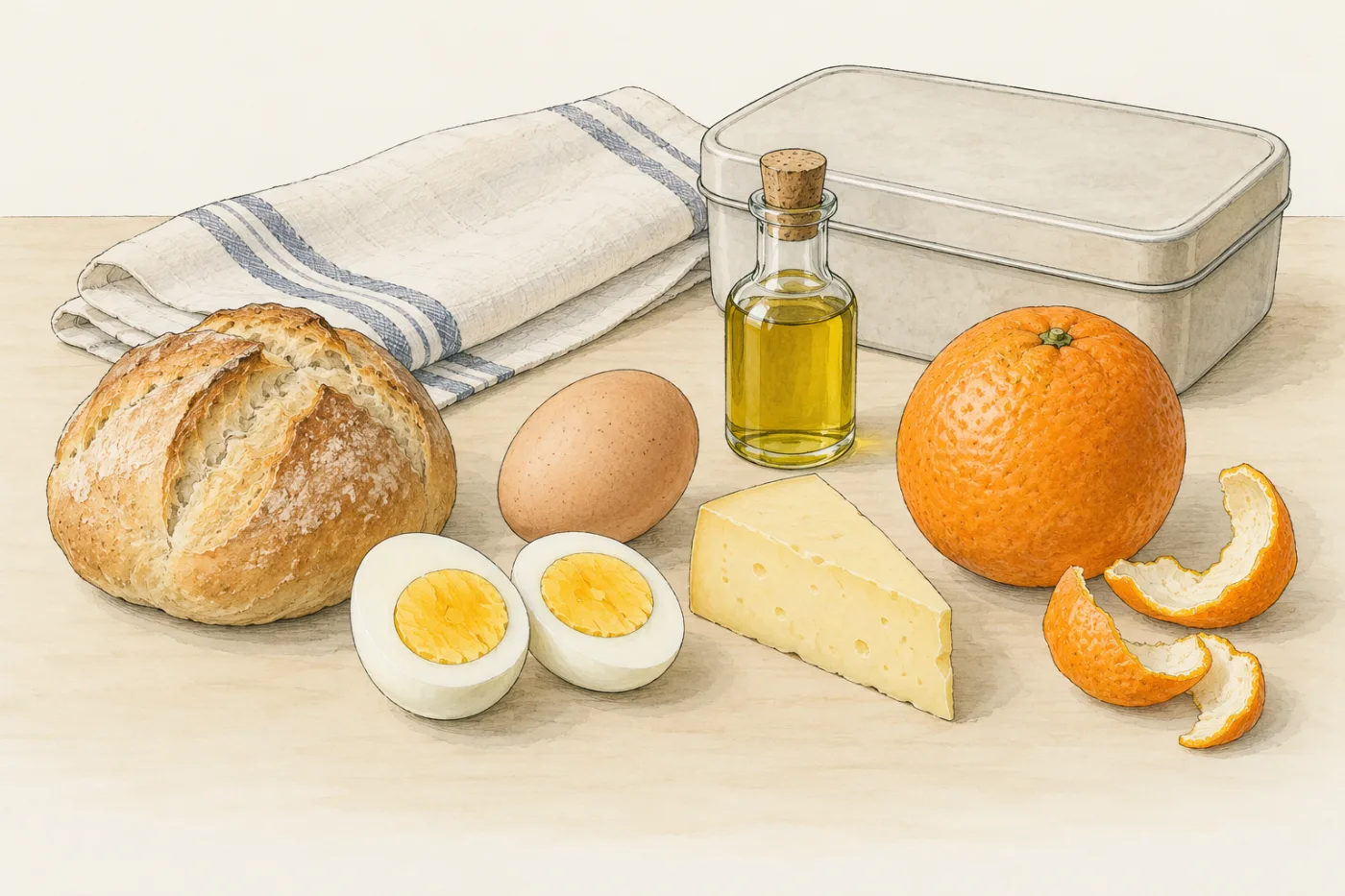
After a lunch of bread and fruit, the starch and sugars in it are digested to glucose, and the glucose is absorbed into the blood. For an hour or so a lot of glucose arrives in the blood; then for hours very little does. Your cells need glucose for respiration all the time, so the concentration of glucose in the blood is part of the internal environment that homeostasis keeps steady. In this part you follow it through a meal and find out which hormone brings it back down.
 (enlarge)
Blood glucose after a meal
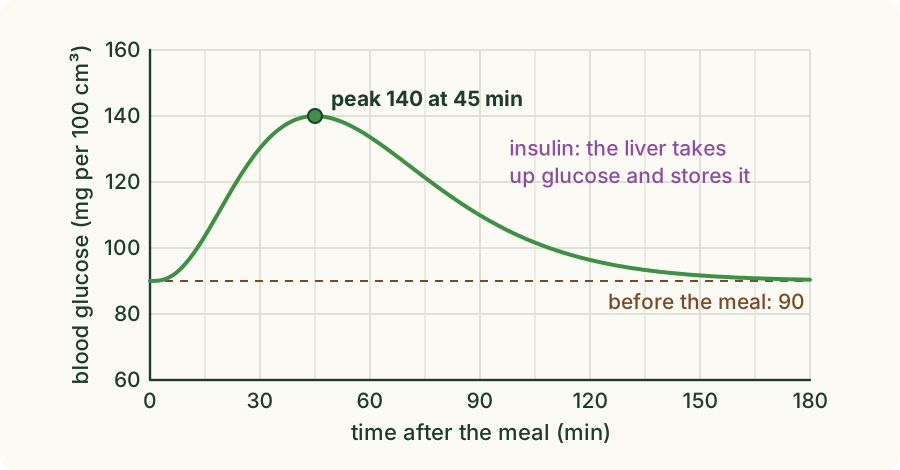
The blood glucose concentration is the mass of glucose dissolved in a volume of blood. Here it is measured in milligrams per 100 cm³ of blood (mg per 100 cm³), as in the module on hormones. The graph shows a model person: typical values, not anyone's own body.
 (enlarge)
Before the meal the concentration is 90 mg per 100 cm³. As glucose from the meal is absorbed, it rises to a peak of 140 at 45 minutes. Then it falls: about 96 at 2 hours and back to 90 at 3 hours, even though the person has not used up all that glucose in respiration. Something removes glucose from the blood.
Insulin decreases blood glucose
That something is the hormone insulin. When the blood glucose concentration rises, the pancreas secretes insulin into the blood. You met the pancreas and insulin in the module on hormones. The blood carries insulin round the body, and insulin decreases the blood glucose concentration: it brings the concentration back down towards its set point.
Trap: "Insulin raises blood glucose" or "insulin is a kind of sugar". Insulin is a hormone, not a source of glucose. It decreases the blood glucose concentration.
(Supplement) The liver, insulin and glucagon
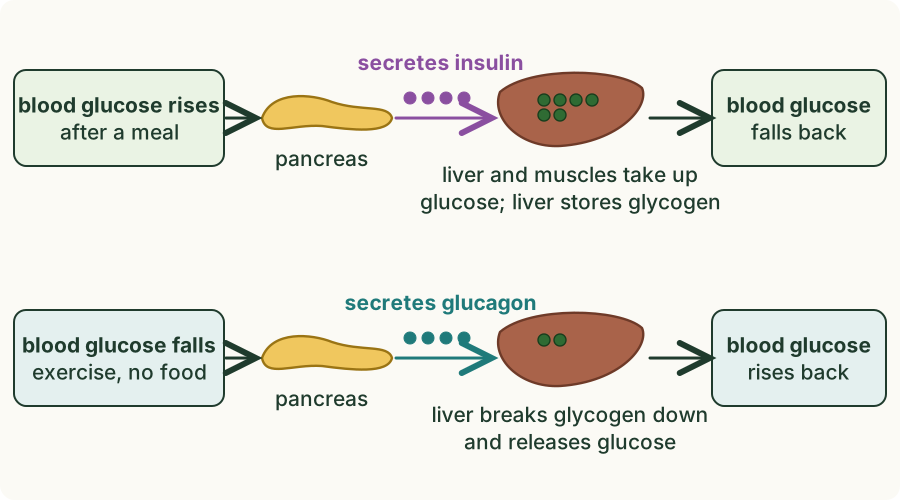
The blood glucose concentration is controlled by negative feedback, like the core temperature, with the liver doing most of the work:
- When blood glucose rises (after a meal), the pancreas secretes insulin. Insulin causes the liver and the muscles to take up glucose from the blood. The liver converts glucose into glycogen, an insoluble carbohydrate made of many glucose molecules joined together, and stores it. The blood glucose concentration falls back.
- When blood glucose falls (during exercise, or after a long time without food), the pancreas secretes a second hormone, glucagon. Glucagon causes the liver to break glycogen down into glucose and release the glucose into the blood. The blood glucose concentration rises back.
 (enlarge)
Each hormone reverses the change that caused it to be secreted: that is negative feedback again. The pancreas is both the receptor, detecting the glucose concentration of the blood flowing through it, and the gland that secretes the hormones.
Trap: "Glucagon and glycogen are the same thing", or "glucagon is made by the liver". Glucagon is a hormone secreted by the pancreas. Glycogen is the storage carbohydrate in the liver. Glucagon causes the liver to break glycogen down.
(Supplement) Type 1 diabetes
In Type 1 diabetes, the pancreas makes little or no insulin. Without insulin, glucose is not taken up from the blood after a meal, and the blood glucose concentration can rise far too high. Type 1 diabetes usually starts in childhood or as a young adult; it is not caused by anything the person did.
It is treated by:
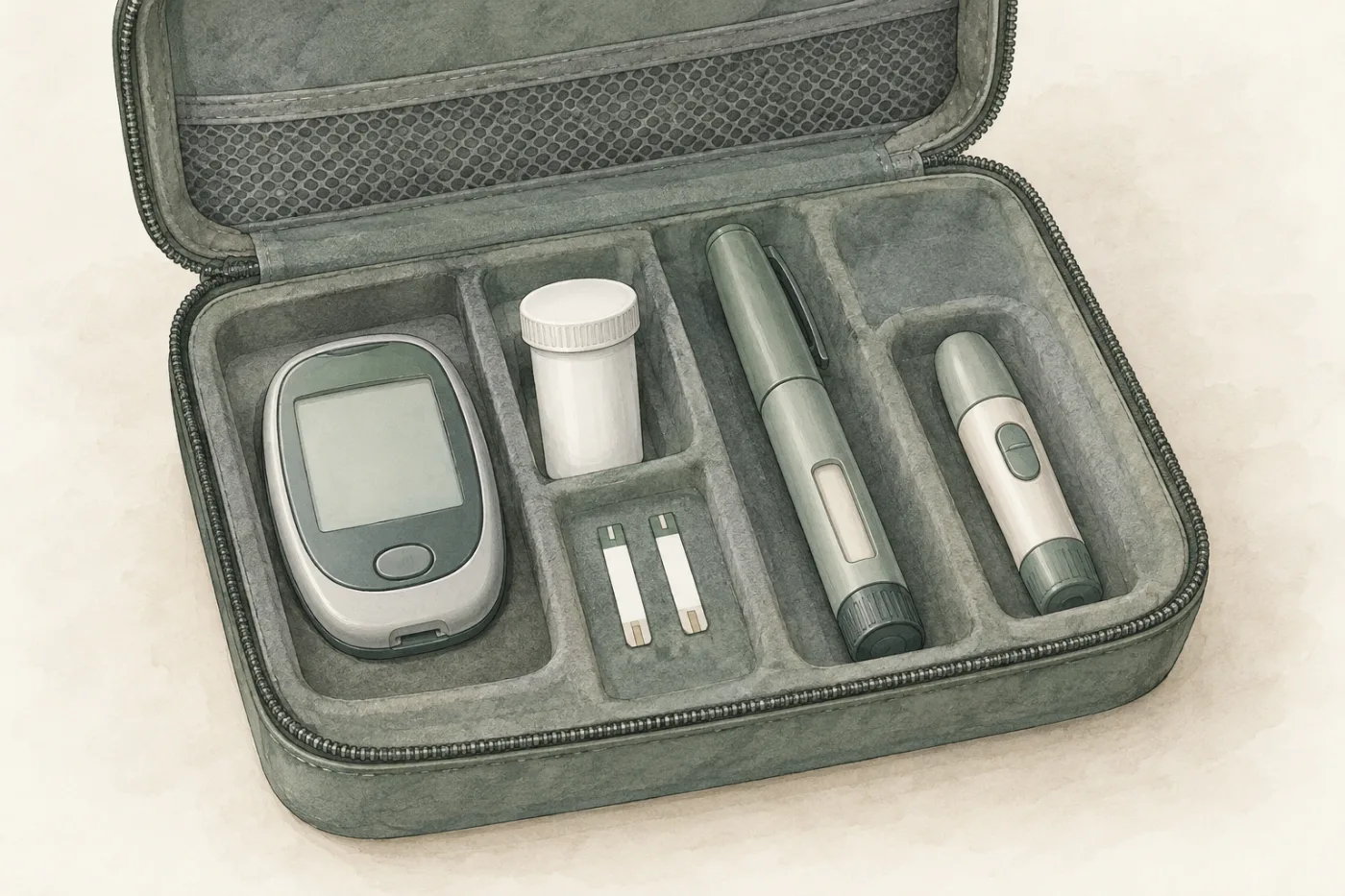
- measuring the blood glucose concentration regularly, with a meter and a test strip or a sensor on the skin;
- injecting insulin, for example with an insulin pen or a small pump, so that the blood glucose concentration falls after meals;
- planning meals and exercise around the insulin, because food raises the blood glucose concentration and exercise lowers it.
 (enlarge)
Insulin is injected rather than swallowed because it is a protein: it would be digested in the stomach and the small intestine like the protein in food.
Run the experiment below before you read on. First predict what will happen to the blood glucose concentration after the meal. Then give the person the meal and watch the glucose monitor; at the peak, choose the hormone the pancreas releases. Read the highest concentration. With the Supplement steps, send the person on a brisk walk without food and choose the hormone that brings the concentration back up.
What the experiment showed
After the meal the blood glucose concentration rose from 90 to a peak of 140 mg per 100 cm³ at 45 minutes. The pancreas secreted insulin, the liver took up glucose and stored it as glycogen, and the concentration fell back to 90 at 3 hours. During an hour's brisk walk without food, the concentration fell to 70; the pancreas secreted glucagon, the liver broke down glycogen and released glucose, and the concentration rose back to 85 within half an hour.
Worked example
What insulin does
A student writes: "After a meal the pancreas releases insulin, which gives the cells more glucose to raise the blood sugar." Correct the statement.
After a meal the blood glucose concentration rises, and the pancreas secretes insulin. Insulin decreases the blood glucose concentration, bringing it back towards its set point. Insulin is a hormone, not a source of glucose.
Worked example
(Supplement) Two hormones, one store
A runner has not eaten for four hours and starts a long run. Describe how the blood glucose concentration is kept up.
Exercise uses glucose in respiration, so the blood glucose concentration falls. The pancreas secretes glucagon. Glucagon causes the liver to break down glycogen into glucose and release the glucose into the blood, so the concentration rises back. After the next meal, insulin causes the liver to take up glucose and store it as glycogen again.
Worked example
(Supplement) Treating Type 1 diabetes
Outline how Type 1 diabetes is treated, and explain why the treatment is needed.
In Type 1 diabetes the pancreas makes little or no insulin, so after a meal the blood glucose concentration is not brought back down. It is treated by measuring the blood glucose concentration regularly and injecting insulin, with meals and exercise planned around the insulin. The injected insulin does the job the pancreas cannot do.
Key idea: The blood glucose concentration is kept near its set point. Insulin, secreted by the pancreas when blood glucose rises, decreases the blood glucose concentration: the liver and muscles take up glucose, and the liver stores it as glycogen. When blood glucose falls, the pancreas secretes glucagon, and the liver breaks down glycogen and releases glucose. In Type 1 diabetes the pancreas makes little or no insulin; it is treated by measuring the blood glucose concentration and injecting insulin, with meals and exercise planned around it.