Contents
Independent final check
Explain without the key
deduce / explain
Final check
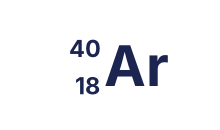
The symbol shows an atom of argon. (a) Deduce the numbers of protons, neutrons and electrons in the argon atom. (b) A different particle has 19 protons, 20 neutrons and 18 electrons. State its mass number and its charge, and name the element. (The elements with proton numbers 17 to 20 are chlorine, argon, potassium and calcium.) (c) Both particles have 18 electrons. Explain why they are not the same element.
deduce: reach a conclusion from the information given. explain: give reasons and connect them to evidence.
 (enlarge)
Your saved work
Answers, earlier attempts and your Pause and check notes stay in this browser. Export a copy to keep, to move to another device or to hand to your teacher. Importing a copy keeps your current answers and adds earlier attempts.
Scope and sources
Cambridge IGCSE Chemistry 0620 · 2026–2028 v2 · Original learning materials.
Atomic structure (2.2 Core 1–6): protons, neutrons and electrons with their relative charges and masses, proton number and mass number, the electronic configuration of the first 20 elements and their ions, the full outer shell of the noble gases, and how outer-shell electrons and occupied shells match the group and the period. Isotopes and relative atomic mass, ionic bonding and the trends of the Periodic Table are left to their own modules.
Apparatus, amounts and times in the experiment are illustrative. Real practical work follows a teacher-approved safety method.
Official Cambridge syllabus