Measure temperature · Biology · Chemistry · Physics
Thermometer
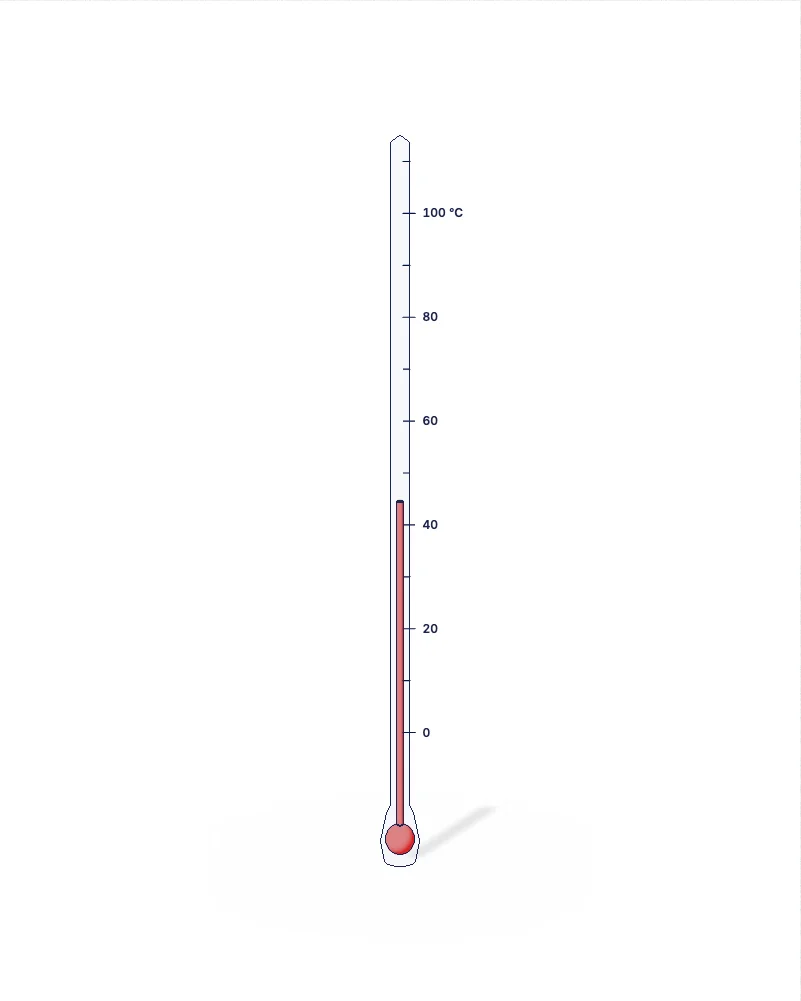
What it is for
A thermometer measures how hot something is. The liquid in the thin tube expands as it warms and rises up the scale; the temperature is where the liquid stops.
- Range
- –10 °C to 110 °C (the Practical Test thermometer)
- Smallest division
- 1 °C
- Record to
- the nearest 0.5 °C, e.g. 24.5 °C
Why choose it
For the temperature of a liquid: water in a beaker, a reaction in a polystyrene cup, a water bath for enzymes. A digital thermometer or temperature probe may show 0.1 °C, and with a data logger it takes many readings in a row; check what its display resolves.
How to read it
- In a liquid, put the bulb fully in, clear of the bottom and sides; in a metal block, put it in the thermometer hole.
- Stir a liquid. Wait for a steady reading; when heating or cooling, read at the stated times; in a reaction, note the highest (or lowest) value.
- Keep your eye level with the top of the liquid column.
- Read to the nearest half division and write the unit: 24.5 °C.
Exam-style question
A student puts 25 cm³ of hydrochloric acid in a polystyrene cup and adds sodium hydroxide solution. The thermometer shows 21.0 °C before mixing and 27.5 °C after.
- Calculate the temperature change.
- Is the reaction exothermic or endothermic? Explain.
- Why is a polystyrene cup used instead of a glass beaker?
Show what a good answer says
- 27.5 − 21.0 = 6.5 °C, a rise.
- Exothermic: the temperature rises because the reaction gives out energy to the mixture and its surroundings.
- Polystyrene is a poor conductor of heat (an insulator), so less energy escapes and the measured rise is closer to the true one.
Teaching points for checking your own answer, not official Cambridge marks.
Common errors
- Reading from above or below the top of the liquid (parallax error), not with your eye level with it.
- Reading a steady liquid before the value has stopped changing, or missing the highest temperature of a reaction.
- Letting the bulb rest on the bottom or side: near a hotplate or flame it then shows the glass, not the liquid.
- Writing more figures than the scale gives (24.37 °C), or leaving out °C.
Where you use it here
- Enzymes Biology
- Limits on photosynthesis Biology
- Respiration Biology
- Transpiration Biology
- Distillation Chemistry
- Energy changes in reactions Chemistry
- Gases under pressure Chemistry
- States and changes of state Chemistry
- Gas pressure and temperature Physics
- Light and the electromagnetic spectrum Physics
- Melting, boiling and evaporation Physics
- Specific heat capacity Physics
From the Practical Test apparatus lists of the Cambridge IGCSE Biology 0610, Chemistry 0620 and Physics 0625 syllabuses for 2026–2028, and the apparatus the experiments on this site use.
More in “Measuring instruments”
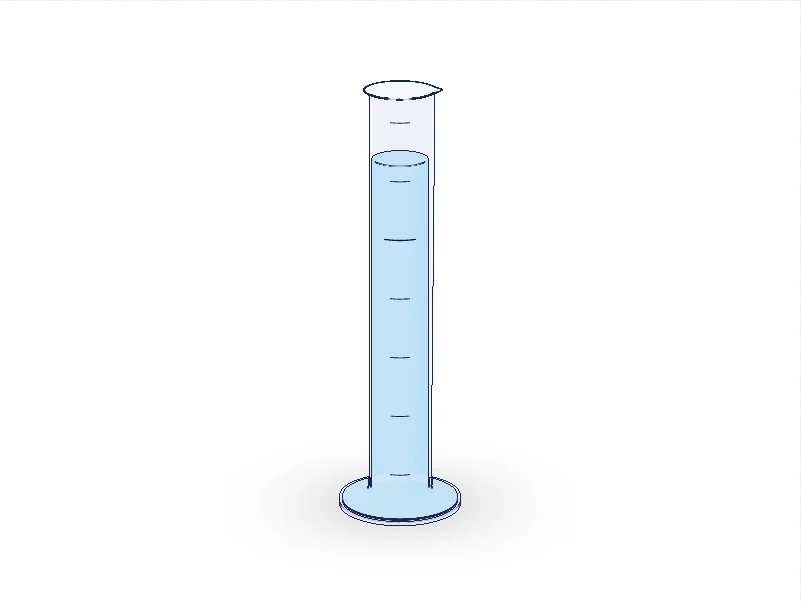 VolumeMeasuring cylinderLiquid volume to the nearest 1 cm³: quick, but rougher than a burette.Biology · Chemistry · PhysicsReading guide
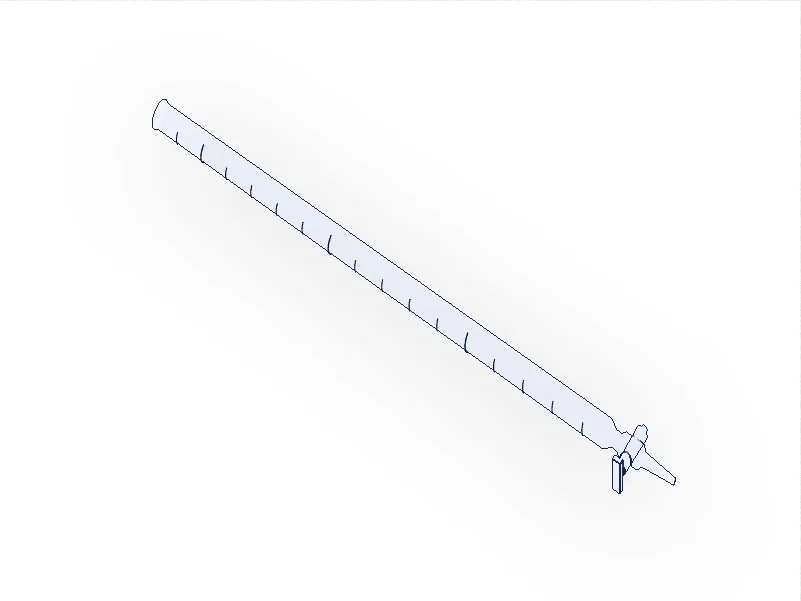 VolumeBuretteA volume you add drop by drop, to 0.05 cm³: the titration tool.ChemistryReading guide
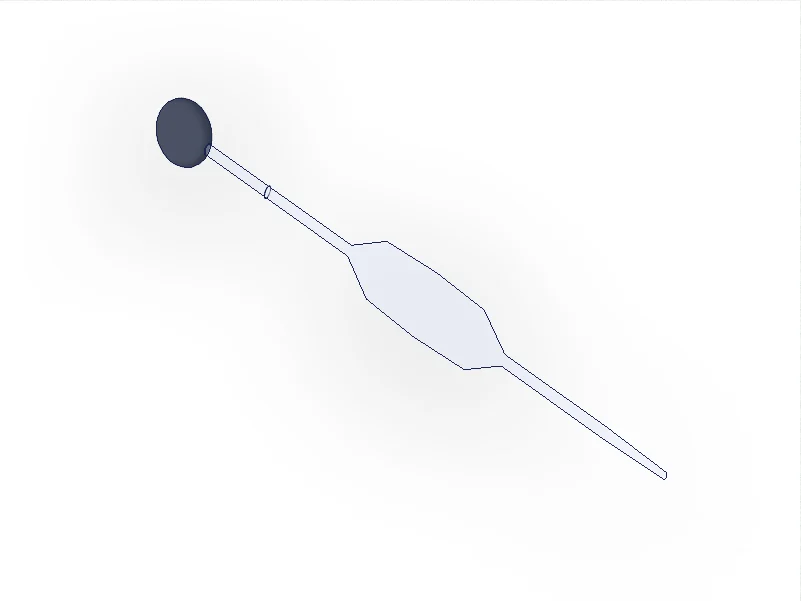 VolumeVolumetric pipetteExactly one volume of solution, such as 25.0 cm³, moved into a flask.ChemistryReading guide
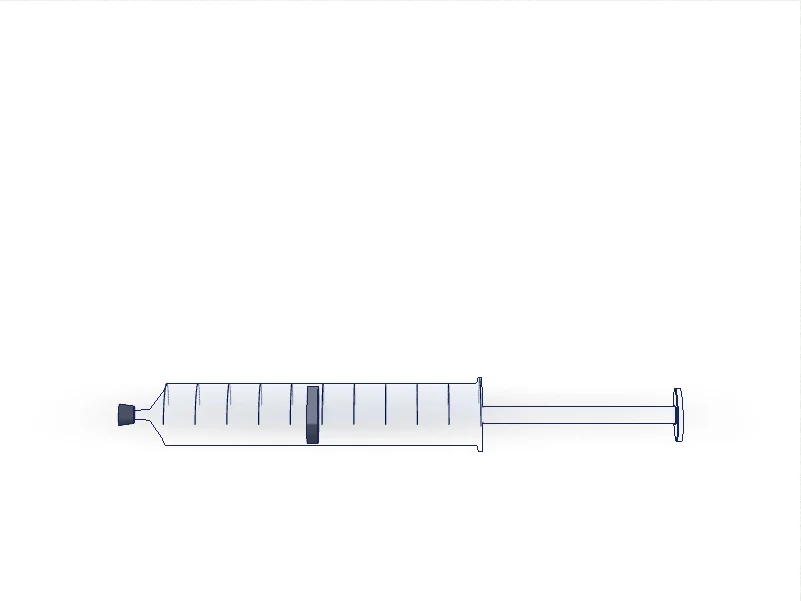 VolumeGas syringeCollects the gas from a reaction and measures its volume, up to 100 cm³.Biology · Chemistry · PhysicsReading guide
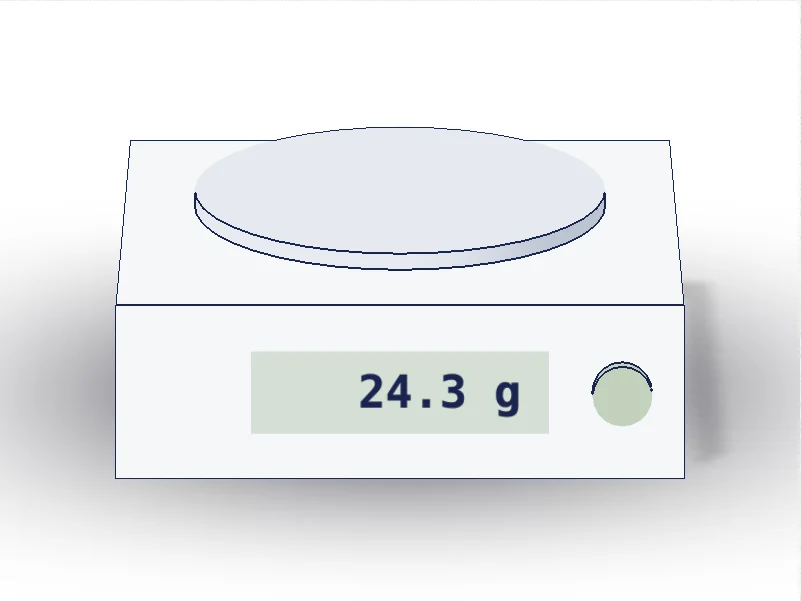 MassTop-pan balanceMass to 0.1 g on a digital display; tare it to weigh just the contents.Biology · Chemistry · PhysicsReading guide
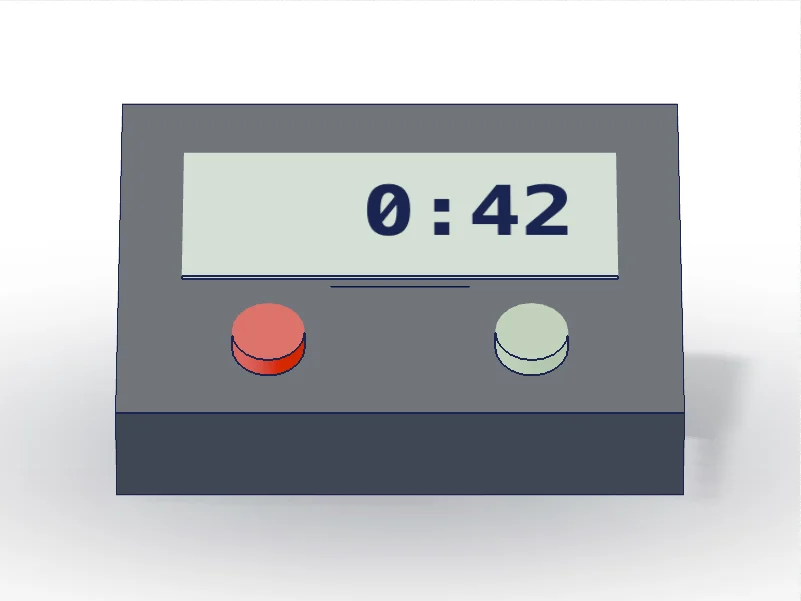 TimeStop-watchTime in seconds; you start and stop it, so your reaction time limits it.Biology · Chemistry · PhysicsReading guide
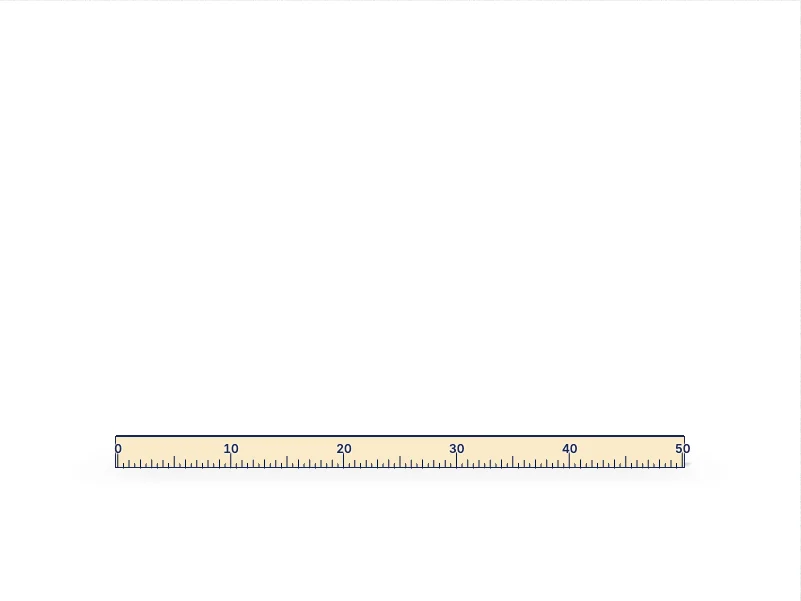 Length and angleRuler and metre ruleLength to the nearest millimetre: 30 cm ruler, half-metre or metre rule.Biology · PhysicsReading guide
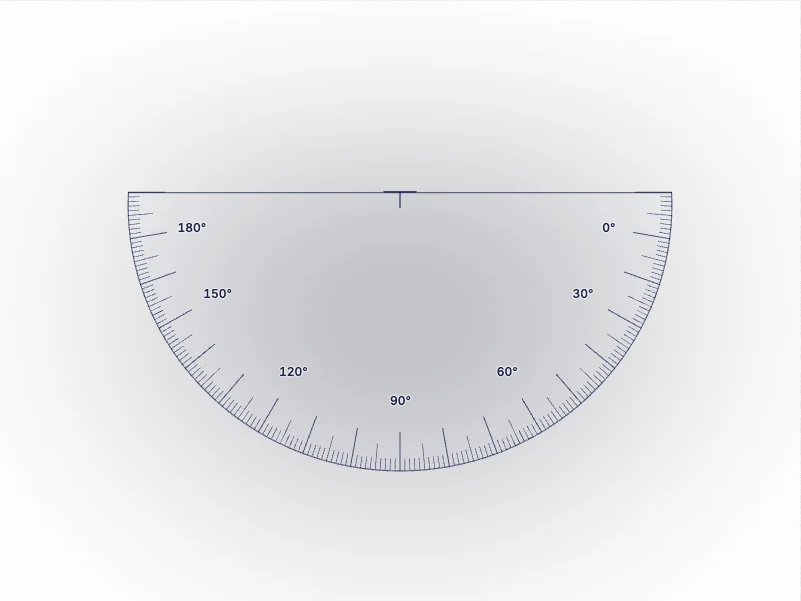 Length and angleProtractorAngles in degrees, 0° to 180°: rays and normals in light experiments.PhysicsReading guide
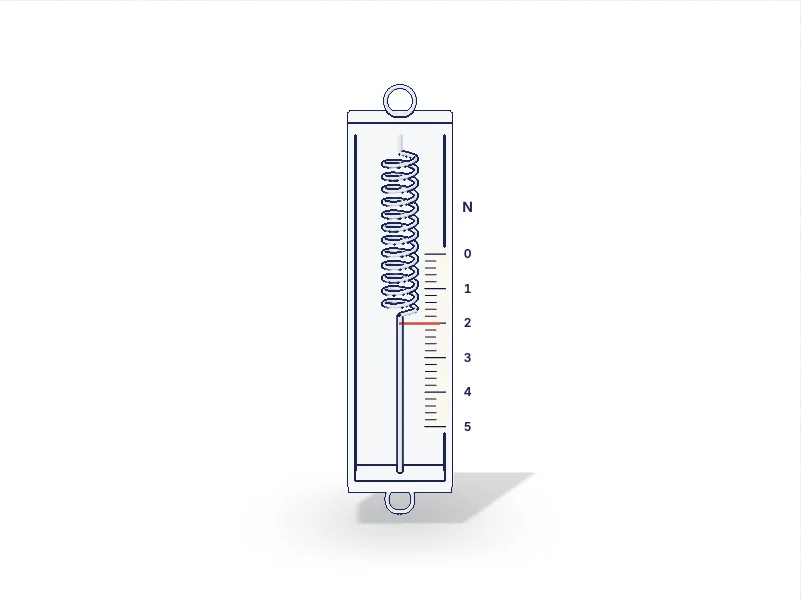 ForceForce meterForce or weight in newtons, from how far a spring stretches.PhysicsReading guide
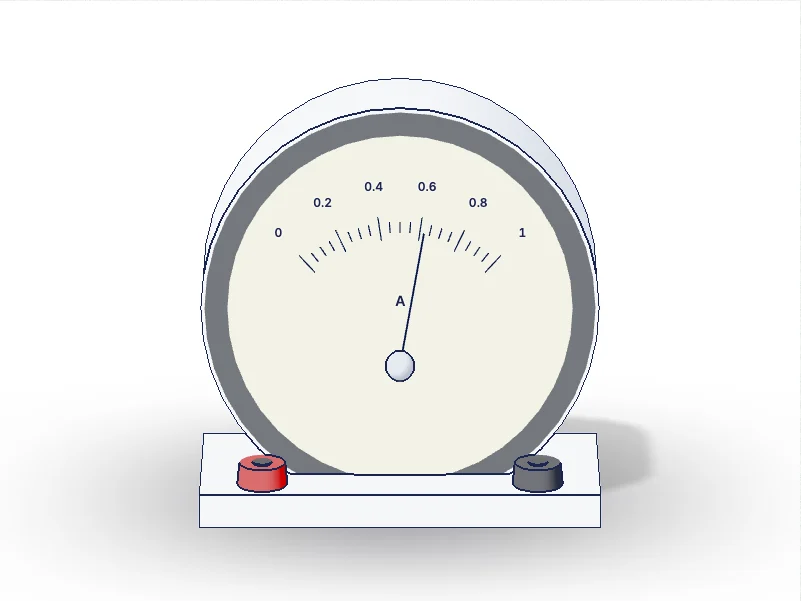 Current and voltageAmmeterCurrent in amperes; it goes in series, in the same loop as the component.PhysicsReading guide
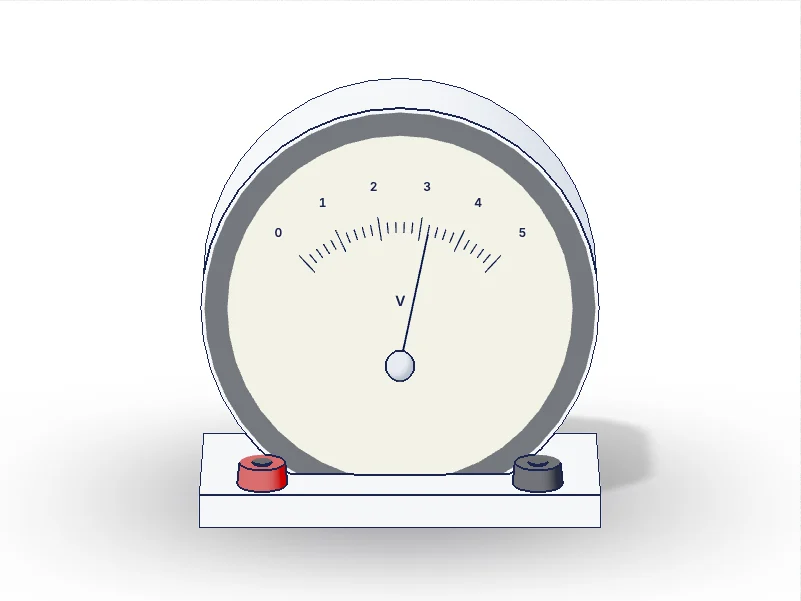 Current and voltageVoltmeterPotential difference in volts; it goes in parallel, across the component.PhysicsReading guide