Pupil sheet · Xylem, phloem and water uptake
Xylem, phloem and water uptake — final check
Name ______________________ Date ____________
Work alone, with the lesson closed. Answer every question; there are no hints.
1. describe
Describe how you would use a suitable stain to find the pathway of water through the above-ground parts of a plant. (a) Describe the method. (b) Describe the control, and say why it is needed. (c) State what you would expect to see.
(a) Method
(b) Control
(c) What you would expect to see
2. identify / state
The drawing shows the stem of a different plant, cut across. (a) Identify the tissues lettered P and R. (b) State the function of each one.
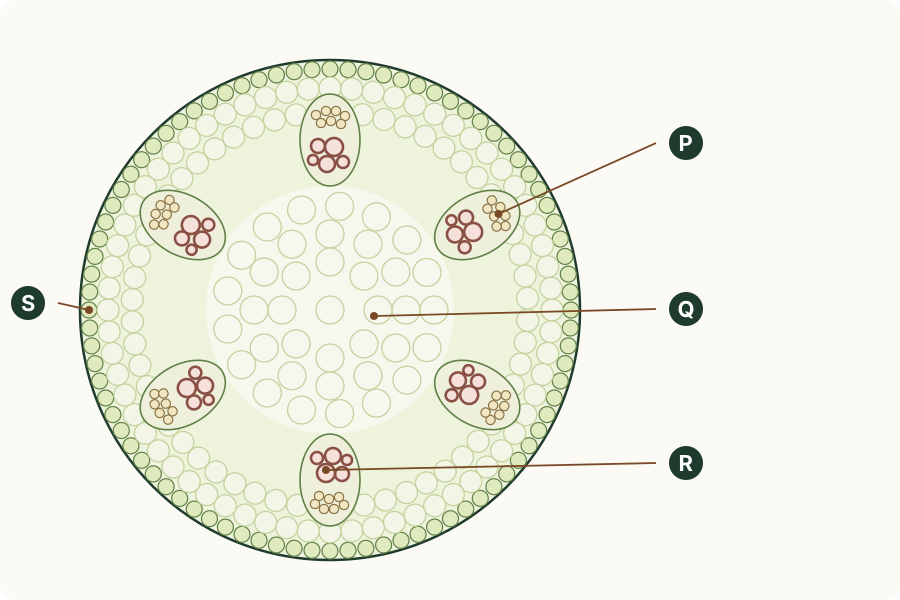
(a) P and R
(b) Their functions
3. describe / explain
Supplement. Describe three features of the structure of a xylem vessel, and explain how each one suits it to carrying water up a plant.
Feature 1, and how it helps
Feature 2, and how it helps
Feature 3, and how it helps
4. identify / explain
The drawing shows the root of a different plant, cut across. (a) Give the letter of a root hair cell, and state its functions. (b) Explain how the many root hairs help the plant.
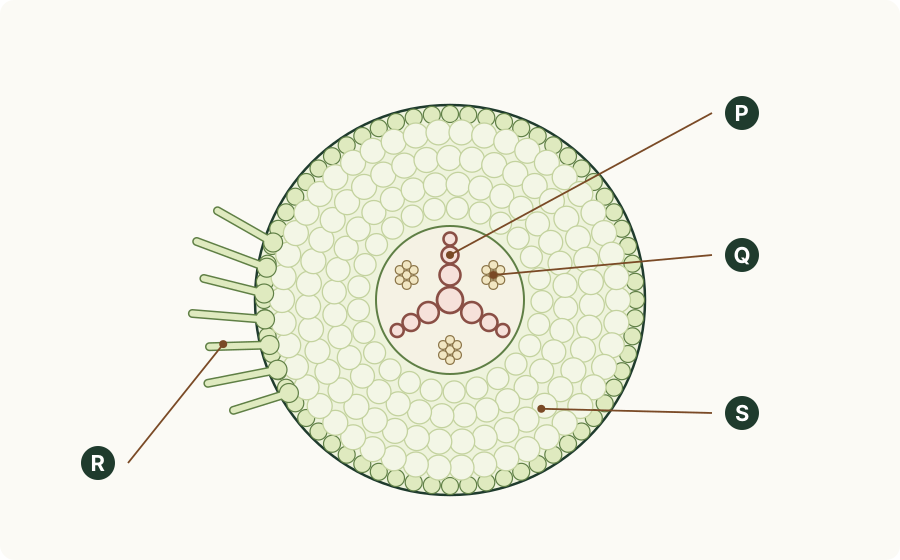
(a) Letter and functions
(b) How the root hairs help
5. outline
Outline the pathway taken by water from the soil to the mesophyll cells of a leaf. Identify each kind of cell or tissue it passes through, in order.
6. describe
Describe where the xylem and the phloem are found (a) in a root and (b) in a leaf of a non-woody dicotyledonous plant.
(a) Root
(b) Leaf
7. identify / explain
Supplement. The drawing shows a bean plant in summer. (a) Give the letter of a source, and explain why it is a source. (b) Give the letters of two sinks, and say what each one does with sucrose. (c) Identify the process that moves sucrose from the source to the sinks, and the tissue it moves in.
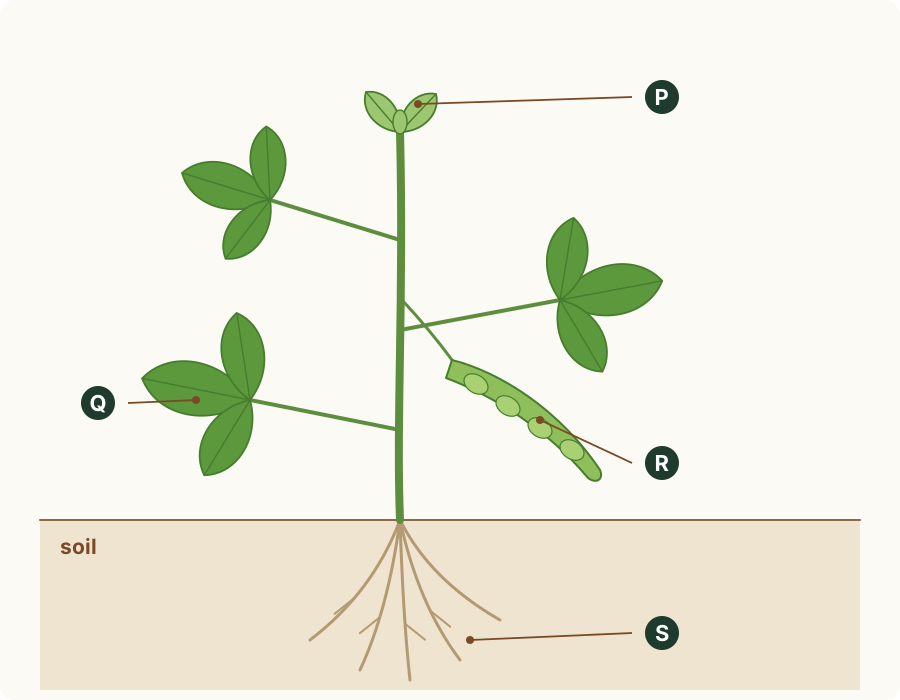
(a) The source
(b) Two sinks
(c) Process and tissue
8. explain
Supplement. Explain why a leaf can be a sink at one time and a source at another.
9. compare
Supplement. Compare transport in the xylem with transport in the phloem: (a) what each one carries; (b) the direction each one carries it.
(a) What each carries
(b) Direction