Light · Physics
Glass blocks and prism
What it is for
Refracts (bends) rays: rectangular and semicircular blocks, a prism.
Mistake to avoid Moving the block while marking the rays: keep it on its drawn outline until every ray position is marked.
Drawn in ink the way exam diagrams show it; the card in the list shows the lab kit's model.
How it is asked
- Describe the experiment: draw round the block, shine a ray at it, mark the ray in and out with crosses, then remove the block and join the points.
- Draw the normal and measure the angles of incidence and refraction from it, not from the surface.
- State the result for a rectangular block: the ray bends towards the normal going in and away coming out, and leaves parallel to the ray that went in.
Exam-style question
A ray of light meets one side of a rectangular glass block at an angle of incidence of 40°.
- Is the angle of refraction in the glass larger or smaller than 40°? Explain.
- How does the ray leave the opposite side of the block?
- Why does a ray that meets the block along the normal not bend?
Show what a good answer says
- Smaller: light slows down as it enters glass, so it bends towards the normal.
- It bends away from the normal and leaves parallel to the ray that went in, shifted sideways.
- Its angle of incidence is 0°: it slows down in the glass but does not change direction.
Teaching points for checking your own answer, not official Cambridge marks.
More in “Light”
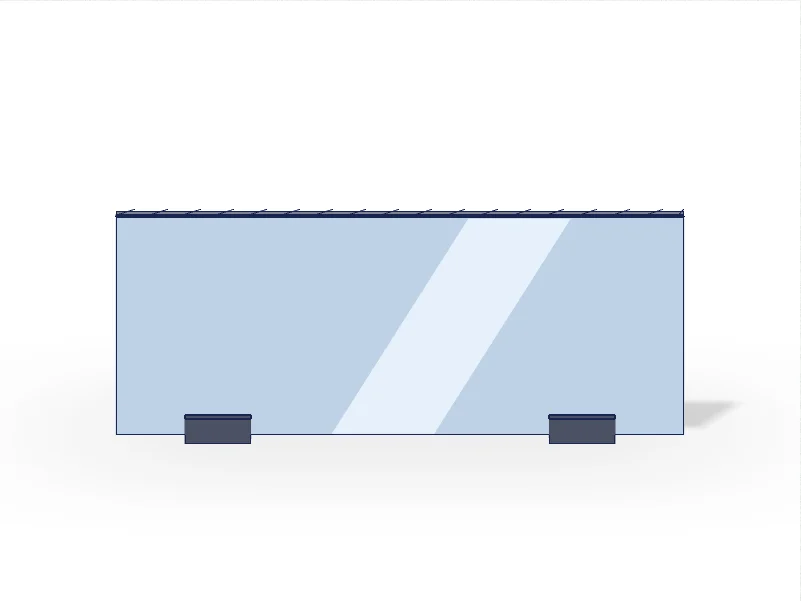 Plane mirrorReflects rays; the image is as far behind as the object is in front.PhysicsExam guide
- Converging and diverging lensesConverging lenses focus a parallel beam; diverging lenses spread it out.PhysicsExam guide
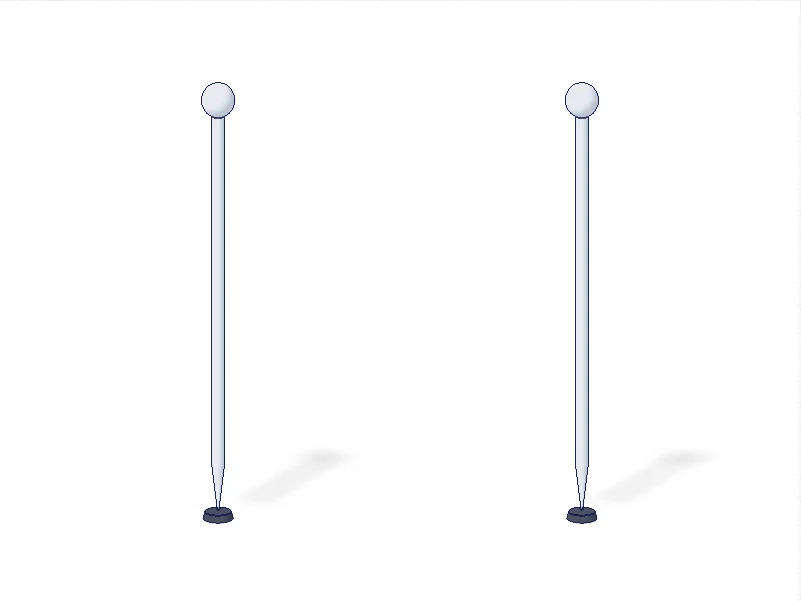 Optics pins and pin boardMark a ray’s path on paper: line up the pins and their images by eye.Physics
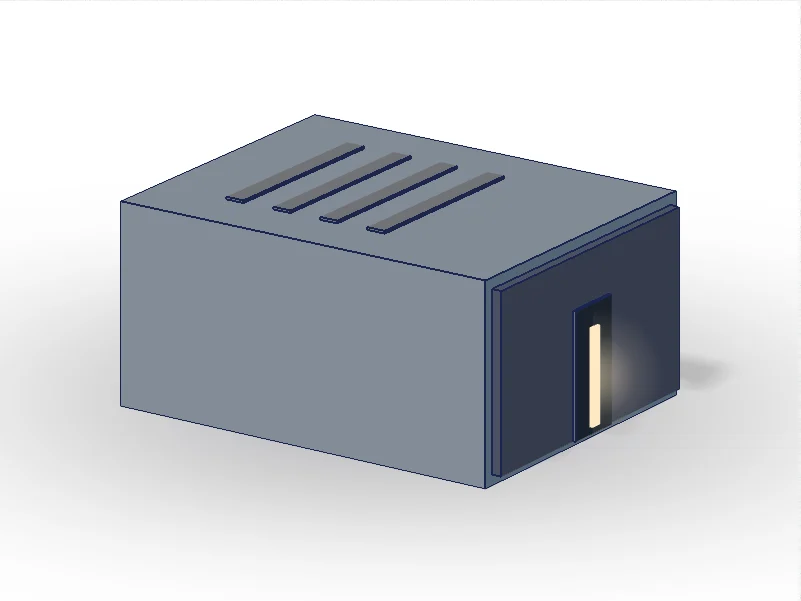 Ray boxA narrow ray of light to trace through mirrors, blocks and lenses.Physics