Separate · Chemistry
Fractionating column
What it is for
Separates liquids that mix, by their boiling points, above the flask.
Mistake to avoid Collecting all the distillate in one beaker: change the receiver when the thermometer reading rises, because the distillate’s composition is changing.
Drawn in ink the way exam diagrams show it; the card in the list shows the lab kit's model.
How it is asked
- Label a fractional distillation diagram: flask, fractionating column, thermometer, condenser and the receiver.
- Explain the separation: the column is hotter at the bottom than the top, so the vapour reaching the top is mostly the lower-boiling liquid.
- Link it to petroleum, which is separated into fractions in a fractionating column by their boiling points.
Exam-style question
A mixture of ethanol (boiling point 78 °C) and water (boiling point 100 °C) is separated by fractional distillation.
- Which liquid distils over first? Explain.
- The thermometer stays at 78 °C for some time, then rises. What should the student do when it rises, and why?
- Why is the column packed with glass beads?
Show what a good answer says
- Ethanol, because it has the lower boiling point. Water vapour condenses in the cooler column and runs back, so the vapour reaching the top is mostly ethanol.
- Change the receiver: most of the ethanol has distilled over and more and more water is coming over, so the later fraction is kept separate.
- They give a large surface on which the vapours condense and boil again many times, so the liquids separate more completely.
Teaching points for checking your own answer, not official Cambridge marks.
More in “Separate”
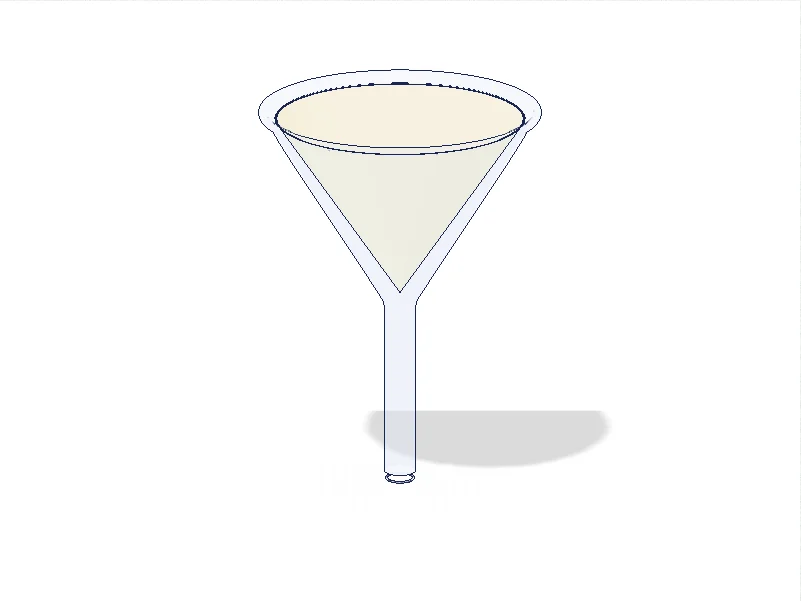 Filter funnel and paperSeparates an insoluble solid (residue) from a liquid (filtrate).Biology · ChemistryExam guide
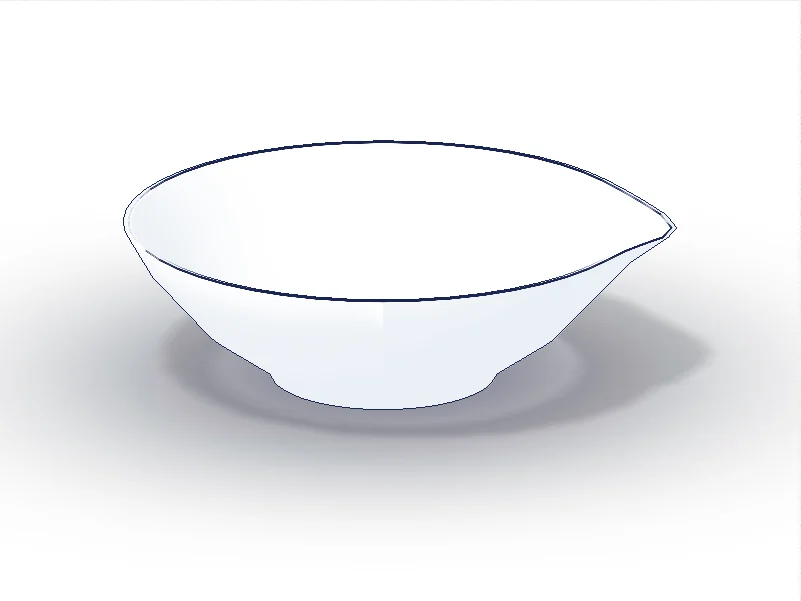 Evaporating basinA shallow dish for evaporating water from a solution to leave a solid.ChemistryExam guide
- CondenserCools a vapour back to a liquid; cold water flows through its jacket.ChemistryExam guide
- Chromatography paperPaper on which a solvent separates the substances in a mixture.ChemistryExam guide