Separate · Chemistry
Condenser
What it is for
Cools a vapour back to a liquid; cold water flows through its jacket.
Mistake to avoid Connecting the water to enter at the top: it should go in at the bottom and out at the top, so the jacket stays full of cold water.
Drawn in ink: the site's lab kit has no model of it yet, so the one at school may look a little different.
How it is asked
- Label a simple distillation diagram: flask, thermometer, condenser, water in, water out and the distillate.
- State that cold water enters at the lower end and leaves at the upper end, so the jacket stays full of cold water.
- Explain what happens inside: the vapour is cooled and condenses back to a liquid, the distillate.
Exam-style question
Pure water is obtained from sea water by simple distillation, using a flask, a thermometer and a condenser.
- Why does the cold water enter the condenser at the lower end?
- The thermometer stays at 100 °C while the distillate collects. What does this show?
- The heating is stopped before the flask boils dry. What is left in the flask?
Show what a good answer says
- So the jacket fills completely and cools the whole inner tube; water let in at the top runs out before the jacket is full.
- The distillate is pure water: a pure substance boils at a fixed temperature, and pure water boils at 100 °C at normal pressure.
- A more concentrated salt solution: the water distils off, but the dissolved salts have very high boiling points and stay behind.
Teaching points for checking your own answer, not official Cambridge marks.
More in “Separate”
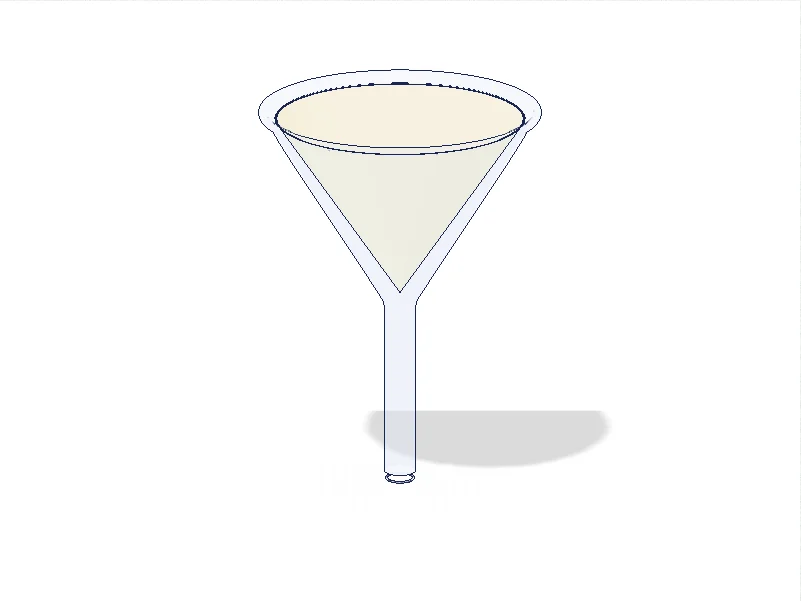 Filter funnel and paperSeparates an insoluble solid (residue) from a liquid (filtrate).Biology · ChemistryExam guide
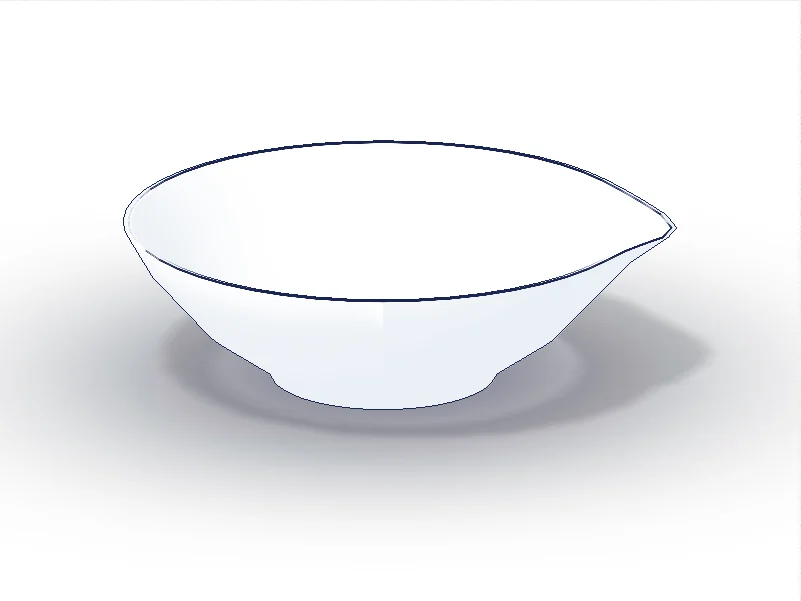 Evaporating basinA shallow dish for evaporating water from a solution to leave a solid.ChemistryExam guide
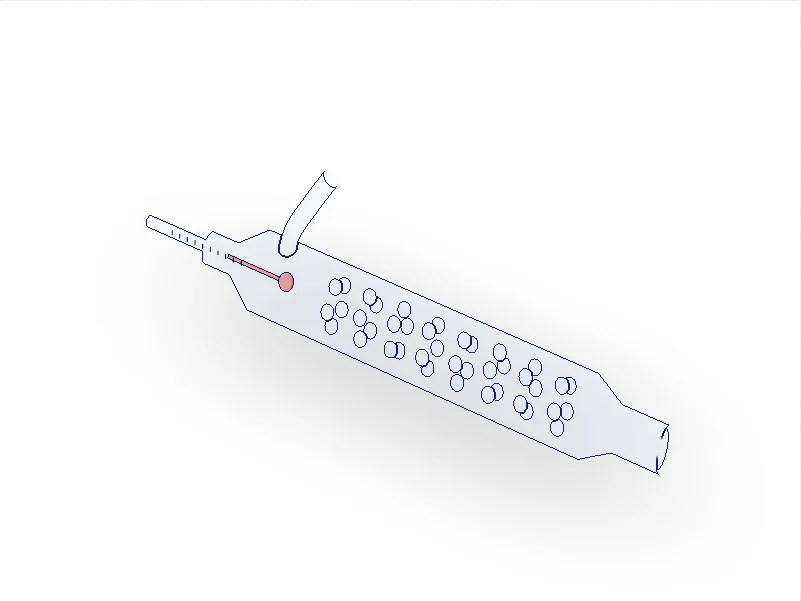 Fractionating columnSeparates liquids that mix, by their boiling points, above the flask.ChemistryExam guide
- Chromatography paperPaper on which a solvent separates the substances in a mixture.ChemistryExam guide