Look closely · Biology
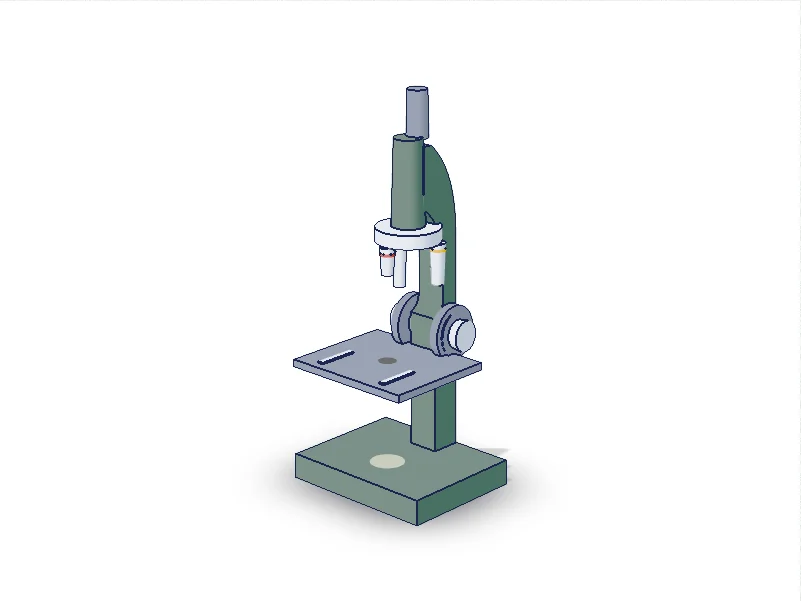
Light microscope
What it is for
Magnifies cells and tissues: magnification = eyepiece × objective.
Mistake to avoid Using the coarse focus with the high-power objective: the lens can hit and crack the slide, so use only the fine focus there.
How it is asked
- Calculate magnification = image size ÷ actual size, with both sizes in millimetres, and rearrange it to find an actual size.
- Work out a microscope’s magnification: eyepiece × objective, such as ×10 × ×40 = ×400.
- Identify cell structures in a photograph or drawing: cell wall, cell membrane, nucleus, cytoplasm, chloroplasts and vacuole.
Exam-style question
A student looks at cells from the skin of an onion bulb with a ×10 eyepiece and a ×40 objective, then draws one cell 60 mm long. The real cell is 0.15 mm long.
- What is the magnification of the microscope?
- Calculate the magnification of the drawing.
- Name two structures in the onion cell that an animal cell does not have.
Show what a good answer says
- 10 × 40 = ×400.
- Magnification = image size ÷ actual size = 60 ÷ 0.15 = ×400.
- A cell wall and a large, permanent vacuole. Not chloroplasts: onion bulb cells have none, as the bulb grows underground.
Teaching points for checking your own answer, not official Cambridge marks.