Test · Chemistry
Flame test wire
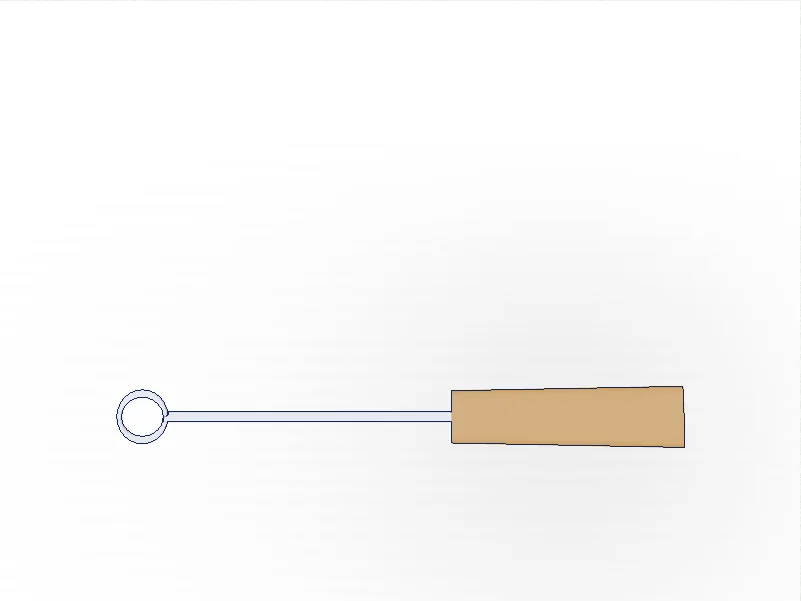
What it is for
Holds a sample in a flame; the flame colour identifies the metal ion.
Mistake to avoid Not cleaning the wire in acid and the flame first: a trace of the last sample, often sodium’s yellow, hides the colour.
How it is asked
- Describe a flame test: clean the wire in hydrochloric acid and the flame, dip it in the sample, hold it in a blue Bunsen flame.
- Recall the colours: lithium red, sodium yellow, potassium lilac, calcium orange-red, barium light green, copper(II) blue-green.
- Explain why the wire is cleaned between samples, and why a blue flame is used.
Exam-style question
A student does flame tests on three solids: P gives a red flame, Q a lilac flame and R a blue-green flame.
- Identify the metal ion in each solid.
- Why is the wire dipped in hydrochloric acid and held in the flame between tests?
- Why is a blue flame used, not a yellow one?
Show what a good answer says
- P: lithium, Li⁺. Q: potassium, K⁺. R: copper(II), Cu²⁺.
- To clean off the last sample, so its colour does not mix with the next one; sodium’s strong yellow can hide other colours.
- A yellow flame has a colour of its own, which would hide or change the colour the metal ion gives.
Teaching points for checking your own answer, not official Cambridge marks.